

Good Sunday all. I intended to write about my trip to the DNC/State Chairs meeting today but the news this morning was awash with tragic stories about the shootings at Brown and in Sydney, Australia. So I’ve ended up with a different post today as my heart is heavy on this first day of Hanakkuh, a celebration of resilience and light prevailing over darkness…….
Two of my daughter’s closest high school friends, young adults who have been in our home many, many times over many years, attend Brown University. One of them was locked in a basement on campus last night for nine hours last night, terrified about what happened and worried whether her friends were among the killed and wounded. When I last talked to my daughter last night she was angry, emotional, and just like what the fuck is wrong with everything……
Thankfully, both of these remarkable young people are safe and unharmed this morning.
So today I’m sharing a thoughtful - and challenging - conversation I had before the November elections with John Della Volpe who has run the Youth Poll at the Harvard/Kennedy School Institute of Politics for the last 25 years. John also writes a very good Substack, JDV on GenZ+.
In the crush of events I just never got around to posting our conversation but today felt like the right day to wrestle with John’s message in this discussion (video above, transcript below) and in the Fall 2025 edition of the IOP’s Youth Poll that was released last week.
Here are some excerpts from the poll summary:
A new national poll from the Institute of Politics at Harvard Kennedy School reveals a generation under profound strain, as young Americans report deep economic insecurity, eroding trust in democratic institutions, and growing social fragmentation. The 51st Harvard Youth Poll finds that for many 18- to 29-year-olds, instability — financial, political, and interpersonal — has become a defining feature of daily life, shaping their outlook on the country and their own futures.
And…..
The Fall 2025 Harvard Youth Poll surveyed 2,040 young Americans between 18- and 29-years-old nationwide and was conducted between November 3-7, 2025.
“Young Americans are sending a clear message: the systems and institutions meant to support them no longer feel stable, fair, or responsive to this generation,” said John Della Volpe, Director of Polling at the Institute of Politics. “Their trust in democracy, the economy, and even each other is fraying — not because they are disengaged, but because they feel unheard and unprotected in a moment of profound uncertainty. Listening to them, fully and without precondition, is essential if we hope to rebuild that trust — one of the defining challenges of our time.”
“Financial fears, political polarization, and concerns over an uncertain future have shattered young Americans’ trust in the world around them,” said Jordan Schwartz, Student Chair of the Harvard Public Opinion Project. “Now is not the time to mince words: Gen Z is headed down a path that could threaten the future stability of American democracy and society. This is a five-alarm fire, and we need to act now if we hope to restore young people’s faith in politics, America, and each other.”
As the father of three Gen Z adults, two in college right now, I can tell you that we have a lot of work to do with young people. They have been through so much - the extraordinary disruption of COVID, the harms of social media, the ugliness of ten years of Trumpism, the true threat of climate change and a warming planet, political assassinations, school shootings, making it in this economy……
Here is something John said in our discussion that still sticks with me:
if you’re not able to envision yourself owning a home and having potentially a family and children—in terms of your mental health, that gives you real anxiety. And if you think about the different subgroups of Americans—when you think about the Hispanic, Latino folks I spend a lot of time with—in terms of their family name, their surname is everything to them, in terms of wanting to make their parents and their grandparents who sacrificed so hard to give them an opportunity in this country, to do better.
And when they’re not able to—even with a college degree—to provide for their family, like their father, who oftentimes was a laborer or painted houses or worked in city services in some way—again, that eats at you. And when Democrats essentially don’t address that, don’t recognize that in terms of what it means to your identity, they’re not able to have a meaningful conversation about any policy, right, if you don’t recognize the humanity.
And that’s just kind of one subgroup. We could do a similar thing with virtually every other subgroup. And that’s what I think is this opportunity—is to listen, is to internalize some of those experiences, because we’ve all had them in our lives, and begin to kind of rebuild the bonds of trust to have more meaningful conversations about what Trump is doing or not doing and what Democrats could or would like to do moving forward. But you need to establish that trust. It needs to start with listening. They need to start, you know, with just showing up in places—whether it’s a coffee shop, on a college campus, on a Discord channel, wherever folks are most comfortable—on podcasts, on conservative TV—wherever young people are, show up, be yourself, be authentic, and leave the talking points to somebody else.
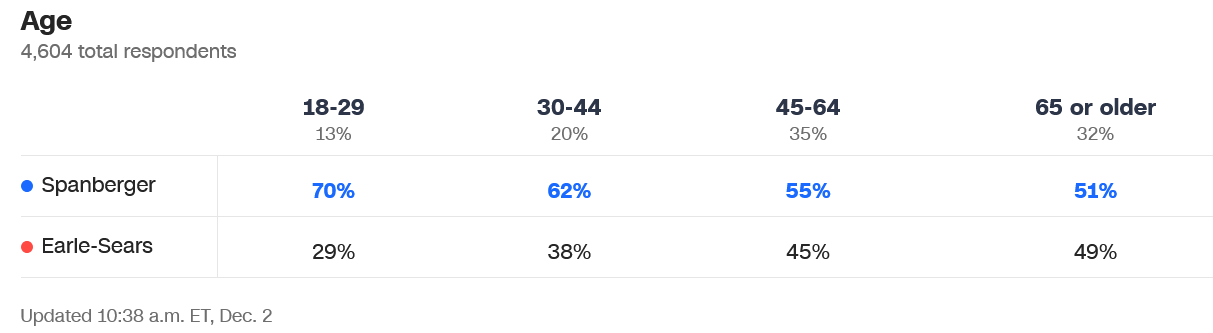
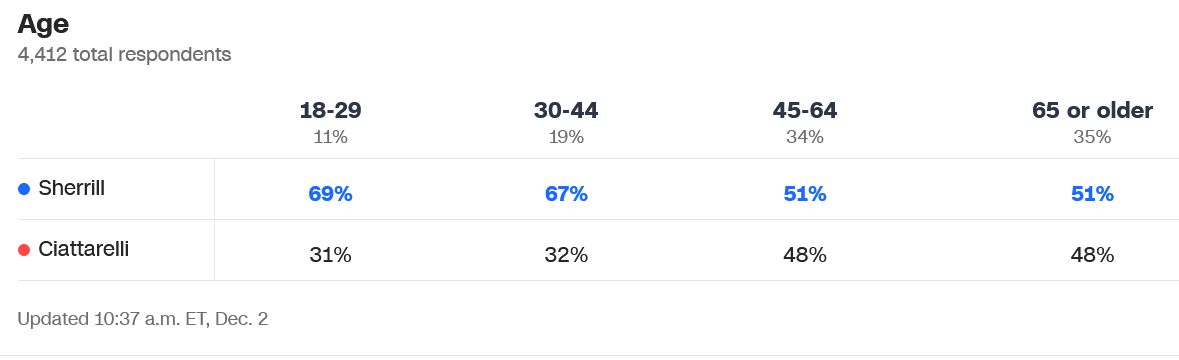
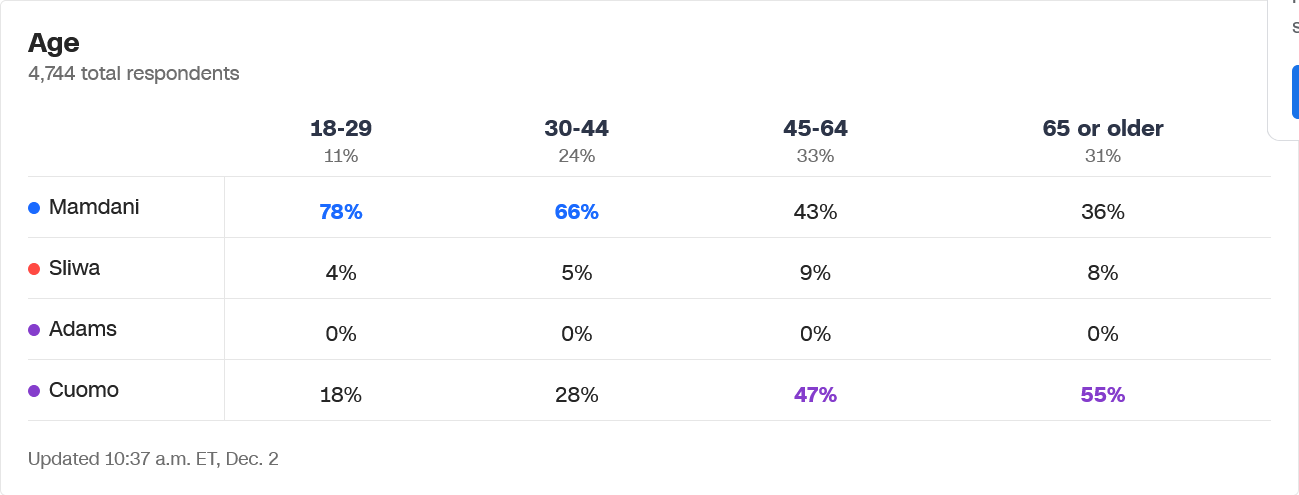
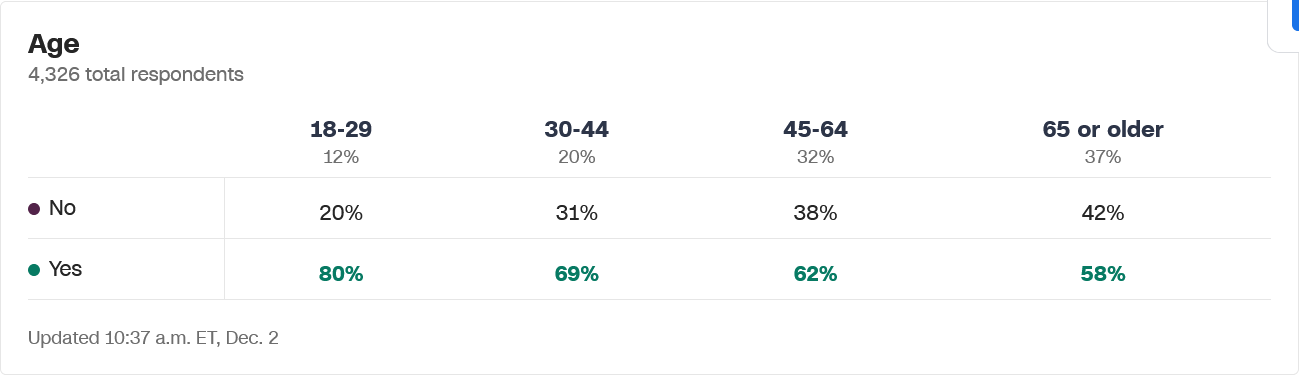
As our interview took place before the November elections we did not know whether our candidates would be able to take advantage of the growing disappointment in Trump we’ve seen in polling of young people. As this Exit Poll data shows the good news is that our candidates were able to restore our pre-2024 margins with young people in the November elections. A promising development for the mid-term elections next year.
Here’s VA, NJ, and NYC:
Here’s Prop 50 in California:
This is a very comprehensive discussion about a really important and challenging set of topics, ones that are also very personal for me. There is a lot in here. Spend time with it all, wrestle with it as we do in this discussion, and keep working hard everyone. We’ve had a good electoral year, Trump is weaker but we must keep acting with great urgency for the young people of America deserve to have the same opportunities that we all had, and today, that is very much in doubt. We can and must do better - for them, and for our future.
Sending love and optimism on a tough day - Simon
John Della Vople’s Harvard Bio (Link)
John Della Volpe is the Director of Polling at the Harvard Kennedy School's Institute of Politics, where he has led research initiatives on American youth since 2000. His work focuses on understanding the attitudes, values, and behaviors of young Americans and their impact on politics and public life.
Rosenberg - Della Volpe Transcript
Simon Rosenberg:
Welcome, everyone. Simon Rosenberg, Hopium Chronicles, back with another great event today. Joining me is an old friend, a repeater here at Hopium Chronicles, John Della Volpe, who’s at the Harvard Kennedy School, oversees the most important youth poll in the country, pollster himself, one of the great experts on youth voting and youth politics of young people. John, welcome. Thanks for being here today.
John Della Volpe:
So great to be back. Thanks, Simon.
Simon Rosenberg: You and I have been having this conversation for many years, and it’s great when you come in and we check in on this. You just had a piece in the New York Times that I want you to talk about, but we haven’t really spoken, I think really since the end of last year or early 2025. And since then, Donald Trump has gone through a transformation of his brand. I mean, he’s not the same guy that he was in November of 24. There’s been, in most public polling, there’s been erosion, some significant in some polls, with his standing with young people. What’s your assessment of where he is now and what we should take away? Because you and I haven’t really had a time to check in on this.
John Della Volpe:
Well, where he is wouldn’t be possible without the support of younger people last year, which is in the White House. It was, I think, a significant strategic shift that the Trump campaign made over a series of years and months that resulted in roughly a 10-point shift among younger men, in particular, away from Democrats towards Republicans and Donald Trump. And, of course, Simon, it was such a close election. One out of 100 people changed their mind. Those blue-wall states, we have a different outcome. But he wouldn’t be where he is if not for the support of young people, young men in particular.
Heading into this year, we started at my company, SocialSphere, a monthly track of Gen Z voters and young adults generally. And we found people were incredibly optimistic about the prospects of the Donald Trump presidency relative to eight years ago, specifically on the economy. There were plenty of people in our surveys and our focus groups who did not agree with most of his positions or his rhetoric, but were just bracing themselves for him to keep some modicum of his promises to improve the economy. So people were optimistic at the beginning of our surveys. And now eight-something months later, we see approval ratings among younger men in particular on important issues like inflation or job creation, tariffs, and economic issues down by an average of over 20 points, 25-point negative shift on some issues, some issues down a negative 19 points in only eight months.
I felt like, again, there was a lot of promise, as there always is with a new administration. Younger people knew that they disagreed with plenty of issues, but they thought he might actually be able to create some stability in the economy. Of course, it’s anything but stability, whether it’s in the economy or virtually any other place across our communities or our country.
Simon Rosenberg:
And do you think in your focus groups—not the polling, but in your focus groups—is the concept of betrayal coming up? I mean, do people feel that he promised one thing and is doing another, or is it just that he’s incompetent and can’t deliver on the promises he made? What’s the understanding of what’s happened?
John Della Volpe:
I think that there’s an element of betrayal on some specific elements of his agenda, Simon. The issue in both focus groups as well as our polling on betrayal was most evident around that whatever that—you know—the big, beautiful, whatever that was, okay? And specifically, at a time when we are losing close to 20 service members and veterans a day through death by suicide, Trump was slashing the budget and then the jobs of frontline mental health caregivers across the Veterans Administration.
That, in the eyes of younger people in particular, was the ultimate betrayal. They could argue, or he could argue, one subgroup versus another subgroup, one strategy versus another economic strategy. But the ultimate betrayal was what that budget did to so many people—folks who obviously kind of served our country and were betrayed by what he did around mental health.
That’s one. I think on the second part of it, we’re not seeing as much betrayal in the focus groups. It’s just that he’s not able to kind of follow through—whether it’s focus or his policies, it’s going to take some time. His policies aren’t able to actually live up to the promises. Younger people, Simon, in the springtime in my focus groups—March, April—were willing to give him some leash on tariffs, on some other things, saying they were in it not just month to month, but they were in it for the long haul, in terms of—they’re just entering kind of the economy. They were willing to give him some slack on that.
But I think their patience is wearing out pretty quickly because he’s not even addressing those issues anymore, right? It’d be one thing if he were being somewhat honest, I think, in addressing these issues, but he’s not even really addressing them. And that’s what younger people cared so desperately about. They want to hear the truth. They want someone to show a little bit of empathy for the situation. I think that close to half of 18 to 29 year olds are in a financial situation that is not stable in their eyes.
Simon Rosenberg:
Listen, it is. We talk about this at Hopium. It is amazing over the last few months about how Trump is not even attempting to make an argument any longer that his agenda is going to make things better for everybody. Right? There’s just not—it’s not even—they’ve like stopped even trying making that case.
What we get is we get, you know, the invasion of cities and we get the blowing up of Venezuelan boats and we get the red carpet for Putin. You know, but it is shocking to me in some ways, given how central this conversation he had with the American people about how I’m going to make your life better.
And how that is no longer, you know, now that he got his tax cut, right? It’s no longer even something that they’re even attempting to address. And it’s creating, I think what I’m hearing from you, John, is that, you know, we have an opportunity.
There’s no guarantee that Democrats can regain their standing with young people based on Trump’s stumbles and struggles. But, you know, we have an opportunity and that gets us to some of what you’ve been writing in the last few weeks, right? You had an op-ed in the New York Times last week about what Democrats can learn from Charlie Kirk. You’ve also been writing on your Substack. Talk to us a little bit about that article, where you see things now.
Obviously, and I do want to say that I have three Gen Z kids and Charlie Kirk was a huge presence in their lives and was somebody that was proximate to them when many political leaders are very distant. Love or hate, right? You know, admire, disdain. He was present in their feeds. People knew who he was. He went to their college campuses, right? So this was a big event for my three kids—not necessarily in the way that it’s playing out on the right, right? But the sense that somebody they know that’s close to their age who was politically active was assassinated.
I think it’s going to create, in my own view, having been through this with other events like this before, I think for young people, this is going to be an awakening—that politics is coming into their lives. It isn’t so distant and far away, but we’ll see. I mean, that’s just my instinct based on, you know, my focus group and my three kids, which is always dangerous, right? You know, to go from that. But tell us about your thoughts about Charlie Kirk and what we need to learn.
John Della Volpe:
I think what you mentioned in terms of the interactions with your kids is something that I heard quite a bit, you know, in the last year or so talking to younger people around the country, where many of them told me that they disagreed with him on a variety of issues, okay. But they gave him credit for showing up and defending his values in an authentic way. He’s viewed as kind of very authentic in his display of those values. And there was respect, I think, for many young people on that particular issue. And many young men in particular see a kind of strength in that—the idea of showing up in an unscripted way, to take questions from virtually anybody.
And if we could take anything, I think, from the events and the assassination and the conversations we’ve had since then, it’s that Democrats in particular need to show up more. Need to show up more in unscripted ways and take questions and have conversations.
That is one of the great divides, I think, in America today, Simon. Charlie Kirk made people feel heard. And the great divide I see is those who—Americans and voters—who feel heard versus those who feel unheard. Donald Trump is a master of making the people who feel unheard, heard. And you can see that in the surge that he gets when his name is on the ballot. And I think that’s something that Democrats could absolutely, positively learn from.
Simon Rosenberg:
How do you do that?
John Della Volpe:
You do that not just based on, you know, some strategic map for the last 60 days of a campaign. You basically do that 24/7, 365, in odd years and even years. You show up on college campuses and in other places where some Democrats—like Pete Buttigieg and others—have been showing up: on conservative podcasts or networks and gaming platforms and other places to show that you’re connected, you’re listening, and that these young people matter in some way.
Simon Rosenberg:
Well, and, you know, Democrats—to their credit—you know, one of the first things that we adopted this cycle after Trump was elected was these town halls, right, where we’ve been going out and listening to people and having very open events.
The contrast, you know, in a time when Trump was open... The Republicans aren’t, right? They’ve sort of closed themselves off. And so I do think you’re seeing Democrats trying much more—Gavin Newsom and others—to go into these unscripted environments.
And it is remarkable, you know, we have time now to look back at the Harris campaign. We all have gone through probably various stages of “I think I understand what happened,” to “I have no idea,” and to “having greater certainty.” But the decision to do rallies, with virtually no town halls, with no listening sessions, with no unscripted events during the entire general election—we will look back on, I think, as something that was a mistake.
Simon Rosenberg:
She didn’t sit down with workers in Arizona to talk about the job growth that had happened there or having… and by the way, she did very well in the debate with Trump. I mean, that was… and so she was… but they put her in almost entirely scripted circumstances for the whole general election. And I think it created more distance. People didn’t get as close to her as they could have if she had been in these environments that were more organic and more, you know, where she wasn’t speaking down to people, right, where she was at a table with people and talking.
And it is kind of like a remarkable thing, actually, when you think about it, about the decision the campaign made. For reasons that we know, right, they wanted to create energy and intensity. We get all that. But there was also the thing that you’ve talked about—this authenticity and openness.
John Della Volpe:
Yeah. I guess they wanted to script it, right? They wanted to script it. Listen, there’s been more than a few people in my focus groups who would tell me something to the effect of, “You know, we’re concerned about literally how many more months we can afford to stay in our apartment. And they’re giving me Beyoncé.” Okay?
I literally have heard that multiple times across multiple groups in an unprompted way regarding kind of the closing moments of that campaign. And I don’t need to tell you, right, that the Beyoncé message was not an economic message. Not only was it not in Wisconsin or in Pennsylvania—it was in Texas—but it was not an economic message.
And when you think about her campaign—when I think about the four years that she served as vice president—one of, I think, her most impactful moments as vice president were times when it was unscripted, right? When she defended reproductive rights after SCOTUS, when she went down to Tennessee, when she went to any number of college campuses and didn’t lecture, but actually listened and took questions and people lined up like never before to hear someone from her position. So it was those unscripted moments in the latter half, I think, of her vice presidency which, to me, gave me confidence regarding her potential as a candidate. But, you know, for whatever reason, those became, you know, kind of fewer and fewer. And she got, you know, kind of—again, I call it being victimized by the campaign’s algorithms.
And the idea that people who are undecided, right, look like Biden voters. They were younger and they looked like Biden voters because they voted overwhelmingly for Biden last time. Just because they look like voters from 2020 doesn’t mean their head’s in the same place as 2020.
It was a completely different cohort with a completely different lived experience—regarding COVID and the economic anxiety—and the campaign just didn’t listen enough. It just didn’t listen enough, in my view. And that’s the thing that Charlie Kirk did. Give him credit for listening, for showing up.
Simon Rosenberg:
Well, and I think that’s… you know, and giving a shit, right? For showing up, for making them a priority, for making young people a priority…..And I think that we often talk—you and I have had these conversations—and I’ve worked a lot in youth politics, that young people have to become the center of everything we do. They can’t be at the strategic kids’ table. And we struggle with that. Some of this is the gerontocracy. Some of this is also just the… you know, the sort of—to your point—I call it the tyranny of the micro-targeting that we have, that it’s just hard for us to go out and have big conversations with people.
And—but talk about what you now, given what you’ve heard and given everything you’ve said—I mean, what’s your… in addition to sort of showing up and listening and being respectful and being present and proximate and not distant… what is your other advice for Democrats right now and what you’re hearing from young people?
John Della Volpe:
So Democrat… in terms of the Democratic brand—it’s seen as just overly cautious and weak, to put it plainly. And I think there’s this incredible opportunity to redefine strength. The Republican Party and Donald Trump do not have a monopoly—conservatives do not have a monopoly—on strength.
And when we think about young men in particular—I talk about this in this piece—the idea of a masculinity vertigo. And it’s centered around that so many young men were raised to be providers and protectors, okay? And Donald Trump, in fact, made essentially kind of a promise to them, right? We talked about this earlier in terms of betrayal—that he would make their economic life better, he would give them strength, he would give them opportunity.
Eight months into this, nine months into it, kind of where are they? Is it easier or more challenging to provide for yourself and the people that you care about? That’s one thing. But I think there’s an incredible opportunity to basically reposition, you know, the attributes that the conservative movement and Kirk and the right have tried to own and make them our own again. The idea of what freedom means to this generation, right? Freedom means that you work hard, you study, and you should have an opportunity to live wherever you want.
So many young people tell me they can’t afford to live in the hometown in which they were raised. They want to, you know, kind of work in their hometown or be a teacher or something. So the idea of freedom in that aspect. There’s, I think, another incredible opportunity for Democrats to reimagine what patriotism is. Specifically, Simon, I know you spent so much time with young people and their willingness to serve, right? Whether it’s through community service, national service, through a variety of different ways. There are signals around strength, around freedom, around opportunity, around patriotism that Democrats have an opportunity to actually make their own, I think, in this time—in addition to, of course, addressing the economic instability that so many folks are kind of facing.
So to me, that is, I think, kind of the opportunity that Democrats have in this particular moment, given Trump’s weakness and the chaos around us.
Simon Rosenberg:
I do think that Democrats—all the things you’re talking about—are very consistent with the advice that we’ve been giving about patriotism, love of country, about being relentlessly focused on opportunity as Democrats, and to give people a chance to get ahead and pursue their dreams.
I mean, these are things that are rock-bed American values, right, that I think have been available to us before and can be again in the battles ahead.
John Della Volpe:
Yeah. And just to take that next step further in terms of, again, if you’re not able to envision yourself owning a home and having potentially a family and children—in terms of your mental health, that gives you real anxiety. And if you think about the different subgroups of Americans—when you think about the Hispanic, Latino folks I spend a lot of time with—in terms of their family name, their surname is everything to them, in terms of wanting to make their parents and their grandparents who sacrificed so hard to give them an opportunity in this country, to do better.
And when they’re not able to—even with a college degree—to provide for their family, like their father, who oftentimes was a laborer or painted houses or worked in city services in some way—again, that eats at you. And when Democrats essentially don’t address that, don’t recognize that in terms of what it means to your identity, they’re not able to have a meaningful conversation about any policy, right, if you don’t recognize the humanity.
And that’s just kind of one subgroup. We could do a similar thing with virtually every other subgroup. And that’s what I think is this opportunity—is to listen, is to internalize some of those experiences, because we’ve all had them in our lives, and begin to kind of rebuild the bonds of trust to have more meaningful conversations about what Trump is doing or not doing and what Democrats could or would like to do moving forward. But you need to establish that trust. It needs to start with listening. They need to start, you know, with just showing up in places—whether it’s a coffee shop, on a college campus, on a Discord channel, wherever folks are most comfortable—on podcasts, on conservative TV—wherever young people are, show up, be yourself, be authentic, and leave the talking points to somebody else.
Simon Rosenberg:
Well… and I want to just put an exclamation point on this because I do think that I’ve learned a lot through my kids, because I talk to them about their lives and what they do. And I think that for many of us, this whole podcasting kind of thing that Democrats kind of missed in 2024 is…
What’s so wild about it is that, you know, my oldest son—you know, starting with his generation, probably slightly older than him and then down—the way they learned about stuff was through influencers, right? Through… My son learned how to build computers when he was 15, 16 years old through Linus Tech Tips. Right? It was a guy, Linus. And Linus would talk to him. Linus talked to him. It was a respectful relationship. Linus respected his audience. Linus wanted his audience to get smarter and be more capable. These were respectful relationships they had. My middle son became a professional chef in his teens largely through watching YouTube videos and watching people talking to him about how to do X, Y, and Z. This whole way that young people learned—and on their own, their own learning, their own communities—was heavily influenced by thoughtful, serious people being teachers to them about things that matter to them. Right?
And that’s why your point about the dialogue and the authentic conversation—it’s what they’ve all experienced, right, in their own journeys. Whether it’s sports or cooking or whatever, right—building computers. And they get these scripted politicians and these canned kind of crappily made commercials that feel inauthentic and, kind of to your point, weak. And kind of like, without the courage to come talk to me.
And I do think this issue of strength and weakness—this is a core part of the whole Hopium dialogue and discussion we’re having about Democrats really needing to understand that there’s this whole dimension of politics that has nothing to do with issues—that is about strong and weak and winning and losing and successful and failing and heroes and villains and things that are just not part of our… most of our testing, John, as you know, right?
I mean, we’re overly amped on issue testing and we don’t often poll and focus group and test about these other leadership attributes. This is something I’ve written about extensively. I’ve been in—I did a whole presentation to the 50 state chairs in May about this, right? About the need for us to rethink it. And so when you’re talking about not listening, it’s not just that we’re not listening in an authentic way. It’s also the way that we believe people make up their minds about politics is also not correct, right? There’s this whole other dimension that is a major contributor to the way that people understand things that have nothing to do with traditional issues.
John Della Volpe:
Yes. And what you just offered in terms of how your children became, you know, kind of expert at a young age in being a chef or computers, is a similar, I think, lesson from Kirk, right? Which is you create these communities around sharing trust or culture, right? Then they become a community. And then there’s trust.
And there are dozens of other examples, right? The red pill fitness is a great example of this, right? The auto repair—there are plenty of these things. And then they become somewhat ideological and then persuasive, right? Based upon shared trust over teaching me how to do something. Let me understand how to solve a particular problem.
And that is what, again, I think that the Republicans—because perhaps they had to, right? When they’re out of power, you have to reimagine it and think more creatively in terms of how to connect with more people.
But let’s take the lesson about authentic information, engaging, and learn from it. You have, in my view, the divisive ways in which Kirk practiced that. But then you have the opposite example in New York City, right? Where you’ve got the leading candidate—not just with younger people, not just with men—but with virtually every single demographic group in New York City to this point: Zohran Mamdani, who is channeling the same things that Kirk heard on college campuses into something that seems to work for his electorate.
I’m not suggesting that every electorate in the country is the same as a New York City electorate. But when you begin to listen, you can speak to those fears and those concerns—and do it in a way that is joyful, that gets people involved. And you know what, Simon? Has some hopefulness to it as well. Because that’s what people still, of course, are looking for.
Simon Rosenberg:
Let’s wrap up, John, because of time. But the thing you just said about Mamdani is really important. Many of the images that come across social media from him are him not talking. They’re him just being at an evening event or a celebration or a place where people are coming together. And he’s just there as part of it, right?
It’s not that he has to come speak to people and tell people what to think. He’s just being in community with people and, like, honoring them in that process. Right?
This is, in some ways, Politics 101. I mean, this is the basic—you know, just showing up is kind of a core… you know, for any of us who’ve been in this business, you go where the voters are. You go to the bagel shop on Saturday morning because there’s lots of people there, right? And I do think, John, as somebody who’s a data guy and who does polling, I also think—and I’ll wrap up with this—is that I think we’ve elevated up the data people to a place beyond their usefulness, to some degree, in our family.
And what I mean by that is that Bill Clinton used to say that “I use polling to tell me how to sell my agenda, not what my agenda should be.” And I think that we’ve allowed in some ways the data process and the testing and the information gathering about us and who we are to take up a space that our values have to take up. That our belief systems, our passions have to take up. And not allow data to go there too much, right?
And I think that we’ve got to sort of put the data part of our family back into its lane. And the other lane that we need to grow is the lane of belief and passion and fight and grit and patriotism and love of country—and to let that go back into the normal place that it exists in politics. And we’ve gotten tentative and cautious, to your point. And I think it’s something that we have to really kind of like really have an internal family sort of… we gotta have it out on this, right? Because I think that some of the data folks in our party have gone past the place where the stuff they’re advising is becoming useful. And I think we have to be very careful here.
John Della Volpe:
Yes, I agree a thousand percent. And I’m sorry, Simon, but that is important and obvious when what happened, happened.
When you lose with one out of 100 votes in those three battleground states—when you lose ground with the fundamental cohort of Americans who elect presidents this century—younger people, across men and you lost ground with women—you absolutely need to have that conversation.
And I remember David Plouffe back in 2009, 2010, I think, talking about a data blender. And he would rely not just on polling, right, but on the GOTV walk list and other things.
And what I would argue is you need to at least put a much heavier dose of quality of data into that data blender, right? And not just be about zeros and ones—and actually have some humanity.
And recognize—my final point, Simon—and recognize that the new voters coming to vote for the first time have had a unique set of experiences that have shaped them that we’re not able to measure in any other way other than listening to them when they turn 18, 19, 20 years old. Because there’s no voter history with that group. And that’s the only way to understand and speak to this emerging electorate.
Simon Rosenberg:
And it’s an electorate that’s also very cynical and been through trauma. And, you know, they lived in a period where civil society kind of broke down. And so the trust that they have in broader civil society—there would be reason, lived life experience, for them to have enormous skepticism and cynicism or distance perhaps about the integrity of civil society itself, given that they lived in a period where we had a breakdown in civil society commensurate with like during World War II or something—where people’s lives were so fundamentally altered.
And I think that, you know, Trump at least spoke to that COVID experience. We kind of ran away from COVID in 2024. And I think it was a mistake and something we have to learn from.
John, I could talk to you all day. This stuff is really important to me and it’s very important to the Hopium project. I think that part of the lesson here that I always say in my meetings and my talks is young people have to be at the center of everything we do. They can’t be the strategic kids’ table. And we need to do a far better job at that as a family going forward if we’re going to reclaim some of the lost ground from the last cycle.
John Della Volpe:
Well, I’m here for you as always. And thanks so much for including me in this important conversation.
Simon Rosenberg:
Thanks, John. Thanks, everybody.


