
Transcript of My Conversation With Dr. Rob Shapiro (12/5/25)

SIMON ROSENBERG:
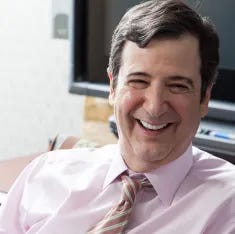
It’s Simon Rosenberg at Hopium Chronicles, back with another great event. Joining me today is my dear friend, Rob Shapiro. Rob, welcome.
ROB SHAPIRO:
Glad to be here. Always glad to join you.
SIMON:
For those who don’t know, Rob and I have been collaborating, talking, and doing things together for over 30 years. He was chief economic advisor to Bill Clinton in the ’92 campaign, undersecretary of commerce — just one of the leading economists on our side over the last generation.
He has a new piece in the Washington Monthly called “Affordability: How Trump Has Made It Worse.” This is the issue of the moment. Rob, walk us through your argument. I strongly recommend this piece — it’s a valuable contribution to understanding how we got to this point where prices and affordability are really driving everything in our politics right now.
ROB:
Most of the discussion about affordability focuses on prices, but prices are only half the issue. Affordability is the intersection between increases in prices and increases in income. If your income goes up 10% and prices go up 5%, you don’t have much of an affordability problem. But if prices go up 10% and your income only goes up 5%, you do.
Another important point is that people have a kind of “muscle memory” about inflation — their perception is not about the last month but about the last several years. In this case, it’s really about the last five years. From right before the pandemic to today, prices overall have risen about 25%. Some categories have risen far more: housing, rent, and food are up 31%; electricity is up 37%; beef is up 55%.
A few things rose less than average — prescription drugs only went up about 6%, gasoline about 15%. But the categories people rely on most — food, electricity, and housing — are all outpacing overall inflation. That helps explain why people feel there’s an affordability crisis.
The other half of affordability is income. Over this five-year period, the median income of American households after inflation is flat. It’s almost exactly where it was in December 2019. Earnings have barely increased — less than 1% after inflation — and that’s true across every education level. The worst hit are professionals and people with graduate degrees, whose real earnings actually declined slightly.
Yet during this time, productivity in the overall economy increased more than 10%. Normally when productivity rises, workers’ earnings rise as well. That didn’t happen. So where did the gains go? Into capital income — interest, dividends, capital gains.
And capital income is extraordinarily concentrated: 88% of it is captured by the top 10%, 52% by the top 1%. Capital income grew 30% over this period. That’s where the productivity gains went.
The government also subsidizes many of the areas people associate with affordability: food (through SNAP), health care (through the ACA and Medicaid), and energy (through support for renewables and tax breaks for oil companies).
What has the Trump administration done? It cut food subsidies, slashed health care subsidies, cut energy support, and raised prices directly through tariffs. Everything they’ve done has made the country less affordable. I say we live not in a MAGA country, but a “MALA” country — Make America Less Affordable.
On top of that, the administration used the money it “saved” by cutting SNAP, Medicaid, and energy programs to fund tax cuts for the people who receive that capital income that surged 30% while everyone else’s earnings stagnated. That is the American affordability crisis.
SIMON:
I’ll add one more piece. This abandonment of working people and the middle class in favor of an oligarchical class is reinforced by how Trump is trying to move the tax burden away from wealthy people and onto working people. He talks openly about wanting to go back to a world before the income tax because he and his friends don’t want to pay capital gains or income taxes.
Tariffs are essentially taxation without representation. They raise prices, but they’re also a tax — a tax borne disproportionately by working people. Wealthy people can absorb a 5–6% increase in grocery prices more easily. So tariffs shift the tax burden downward. It’s a structural reordering of who pays for government. It’s an audacious and obvious betrayal of working people.
ROB:
I would call it counter-revolutionary. It reflects a different vision of society and who matters. It’s radical for a nation founded on the self-evident truth that all people are created equal. To reverse that principle is very radical. And he is backed by a movement — which is the only way to undertake radical change. The only way to counter a movement is with a counter-movement. And I know that’s part of your mission, Simon.
SIMON:
Let’s drill down on tariffs. Republicans understand how bad the political environment is for them next year. If Trump wanted to soften the politics, reversing the tariffs would be the obvious move. But he won’t. The tariffs weren’t passed by Congress. Courts have found them illegal. The Supreme Court might agree. But he’s wedded to them despite the political pain and economic harm.
Why? Because tariffs are central to everything he’s doing. They help unravel the entire post-WWII economic system, which spent 80 years lowering tariffs. Tariffs were treated almost like economic weapons — they were harmful, destabilizing, and contributed to past global conflicts.
His wildly aggressive tariffs violated trade agreements, including Senate-ratified treaties with our closest allies. Let’s talk about the broader harm to our national interests.
ROB:
To understand the damage, look at the history of tariffs. Starting in the 1950s under the General Agreement on Tariffs and Trade (GATT), the U.S. unilaterally cut tariffs as part of the post-war world order. These cuts supported U.S. Cold War strategy — they tied allies to us economically.
The unraveling of that regime — imposing global tariffs at the highest levels since the 1930s — undermines not just prices but the character of our global alliances.
We do not trade with our enemies — Russia, Iran, North Korea. Tariffs affect our allies, creating fissures in relationships that have maintained world peace. This aligns with his attacks on NATO and even the new national strategy saying the U.S. will support far-right anti-immigration parties across Europe. That’s another breach in alliances — another crack in global stability.
SIMON:
Exactly. The tariffs are part of a central project: dismantling the American-led global order that won the Cold War and kept America prosperous. Instead of making America great, he’s unraveling the system that made us powerful, wealthy, and free.
This is why he holds onto the tariffs even though they hurt him politically: they accelerate the collapse of the global system America built.
ROB:
There’s another reason he won’t give them up: he needs the money. Tariffs bring in hundreds of billions a year. We’re already running deficits nearly equal to all domestic saving, meaning we rely heavily on foreign investors. Without tariff revenue, long-term interest rates would rise even further. He’s trapped.
And yes, I agree — the tariffs are part of a dark vision for the country and for democracy. But he also has a direct political motive to keep them in place.
SIMON:
This is why Democrats should make eliminating the tariffs central. They raise prices, unravel our global system, and weaken our alliances. And if the tariffs go away, the government would have to raise taxes on wealthy Americans to replace the lost revenue.
If your goal is reversing tax cuts for the wealthy, attacking the tariffs is a direct path.
ROB:
Yes — though he’d try to cut Medicare and Social Security first. But Congress wouldn’t go along.
SIMON:
Exactly. Which is why the tariffs are such a political weakness for him. His polling on economic issues — trade, inflation — is often in the 30s. Making him defend the tariffs further weakens the regime.
ROB:
It could end his presidency politically. Tariffs are his signature issue. Backing down would shatter his authority. He’d try to claim he negotiated massive new investments, but that’s smoke and mirrors.
When a presidency is built on mindless economic policy and destructive foreign policy — plus what I call a theater of cruelty — this is the result.
SIMON:
That phrase really resonates. He’s essentially leading a secessionist movement — seceding from the modern West’s ideas about democracy, human rights, rule of law, and global economic cooperation.
This administration has withdrawn from the WHO, skipped the G20, undermined NATO, and systematically attacked the international order America built. It weakens us relative to China and Russia.
He’s effectively trying to reverse the outcome of the Cold War.
ROB:
Europe hasn’t been cowed. The American people haven’t been cowed. He has about 36% support — core Republican base territory.
And new research shows that majorities of self-identified MAGA supporters approve of the use of violence for political ends — immigration, election issues, crime. That’s another dark frontier we must confront: his embrace of violence.
SIMON:
Let’s shift to the data issue. Today’s jobs report didn’t come out. Trump has pulled resources from agencies that collect core economic data. They’ve even deleted datasets that would document the harms they’re causing. They’re undermining the integrity of the entire economic information system.
As someone who once oversaw the census, what should we make of this?
ROB:
It’s completely consistent with an administration where truth is defined as whatever the leader says. Data, facts, and reality are inconvenient.
Much of our economic data depends on companies self-reporting online. During the shutdown, the administration shut down the submission system — even though nobody needed to “receive” the data; it’s machine-to-machine.
This is necessary for sustaining the leader’s delusions. But you ultimately cannot convince people that their lived economic reality is different from what they feel.
SIMON:
They also seem to believe they can do what they did in 2024 — use campaign machinery, money, and propaganda to bully their way through. They aren’t course-correcting on policy — they’re doubling down, despite the damage and the worsening conditions people will face next year.
ROB:
The economy outside of the AI investment boom is flat or in recession. Economists across the board see this. And when the economy goes down, it doesn’t just pop back up. There’s inertia.
SIMON:
Exactly. And the scale of the lying and delusion is shocking. Their policies — tariffs, health care cuts, mass deportation, research cuts — amount to sabotage, plunder, and betrayal.
We must explain these harms clearly to people.
Rob, thank you for all your decades of wisdom. Any final thoughts?
ROB:
Happy to join anytime. And my final word is: don’t be cowed. Don’t be discouraged. Gerrymanders don’t work in a wave election. Every act of resistance is contagious — it signals to others that they’re not alone.
He is the head of a movement. The only way to stop a leader with a dedicated movement is with a counter-movement. If we do it right, this too will pass.
SIMON:
Your lips to God’s ears. Thank you for your piece, Rob. And thank you to everyone watching. Keep fighting.
If we do it right, this too shall pass. Excellent discussion.
🌟🇺🇸 “When Democracy Wasn’t a Police State”
We remember a time,
not too long ago,
when Main Street could blossom
and small shops could grow.
When government’s message
to neighbors was clear:
“Start up your dream—
we’ll help, not interfere.”
But then came the tariffs,
the taxes in disguise,
that jacked up the prices
on everyday buys.
They rattled our markets,
they rattled our town,
till factories shuttered
and wages fell down.
He picked fights with allies
who’d long stood beside,
where many have family
and kin they still pride.
He snarled at our partners,
he fractured our trust,
turning teamwork to tantrums
and friendship to dust.
Then visas got tangled
in red-tape and fear,
with five years of socials
to sift and to smear.
Tourism suffered,
farms lost their hand,
students and nurses
were stalled at the land.
From boardwalks and diners
to bright concert lights,
the jobs slowly vanished
like stars in bad nights.
It hammered our teachers,
our clinics, our art,
the everyday engines
that once drove our heart.
Yet one line of business
kept growing in size—
more ICE, more informers,
more watchful cold eyes.
Bounty-hunt biceps
and cages and gates,
more boots and more badges,
less hope in our states.
But we, older watchers,
recall something great—
when “democracy”
didn’t mean “police state.”
When laws still had limits,
and rights had a space,
and neighbors felt welcome
in our common place.
So we talk to our children,
we share what we know,
we lift up the voices
that truthfully show
How policies hurt us,
how cruelty spreads—
and how we can choose
better paths instead.
With comments and resharing,
with facts we relate,
we’ll guard the America
that once felt less late.
For a freer tomorrow
is still ours to make—
when we stand up together
for a non–police state. ✨🇺🇸
#ResharingBrigade #GrandparentsForTruth #IndyMedia #ProDemocracy #SupportUkraine #SupportPalestine #SupportAfghanVets