Greetings everyone. Excited to share with you a conversation I had today with one of my heroes - historian, teacher, Substack pioneer - Heather Cox Richardson. I asked Dr. Richardson to come by and share her thoughts about where are now at the 250th anniversary of our Founding, and am grateful she was able to spend time with us today. Here is some of what she said:
Our democracy is under siege. I mean, quite obviously, not only from the elected representatives in the White House and in the Congress, but also from the appointees that Trump has put in place. And also, crucially, at the Supreme Court.
And that attack on our democratic system in order to concentrate wealth and power among a very small group of people looks a lot like other moments in our past, for sure the 1850s, the 1890s around the turn of the last century and the 1920s. But what we have now is really a president in power who is doing everything he can in tandem with the Supreme Court to overturn the system that we have built since 1933. And to turn what is really extraordinary American wealth – and I don’t mean money – I mean lives that are worth living because of family, and faith, and education or whatever is important to you to make you feel like you’re living the life that you want to live. We’re watching people turn that into money and put it in their own pockets. And so in that we are in a different moment than we have been before.
And that is absolutely the case. But one of the things that I find exciting in this moment, and one of the reasons I read Hopium, is because we are watching the American people remember the values under which our democracy was formed. And finding new ways to express that, and to push back against the idea of tyranny – in the same way the Founders did. And when they do that as they did in the 1860s, and again in the 1890s in the early Progressive Era, and then again in the 1930s and going forward, what we tend to do is to remake American democracy to overcome the new problems that have arisen. Westward expansion, industrialization, a global economy, a nuclearized world… when we do that, we tend to make democracy more able to adjust to the new things coming over the horizon, in this case, like climate change, like migration, and disease and all the things that right now we have to adjust for.
So where I see us right now is sort of on a knife edge between a renewed, healthier democracy and authoritarianism. You know, I always look at a moment like this at where the momentum is, and it sure looks as if the momentum is on the side of the American people.
A recording of our interview is above, and a full transcript is below. Get to it as soon as you can. It’s an inspiring conversation with one of the most important thoughtful leaders of our pro-democracy movement.
We also discussed Heather’s powerful new 250 to 250 Project that that you can find on her Substack Substack and YouTube channel. In this passage she gives some background on 250 to 250:
while there was so much confusion and so much noise around the event itself, especially coming from the White House, my team said why don’t we just do something that looks like the bicentennial minutes from 1976 except focusing on the different ways that Americans in the past have embodied American history and have changed the world as individuals. And so we’re looking at events, we’re looking at places and we’re looking at people who changed the country.
Here’s her video introducing this compelling project:
I am going to let her words in the video and transcript speak for her so I’ll just close with this - her Substack, Letters From An American, was the central inspiration for Hopium Chronicles. In exploring whether I could move my work from the organization that I’d been running for many years to this new, more creative platform, I studied Heather’s newsletter and community and became convinced that indeed something like Hopium was possible. So I’ve always considered her a patron saint of this proud, plucky, patriotic community, and hope you will follow her extraordinary work as closely as I do.
Enjoy this conversation with one of the great ones, share it with others, hit like so more so will see it, and keep working hard all.
For we have a country to save, and elections to win, together! - Simon
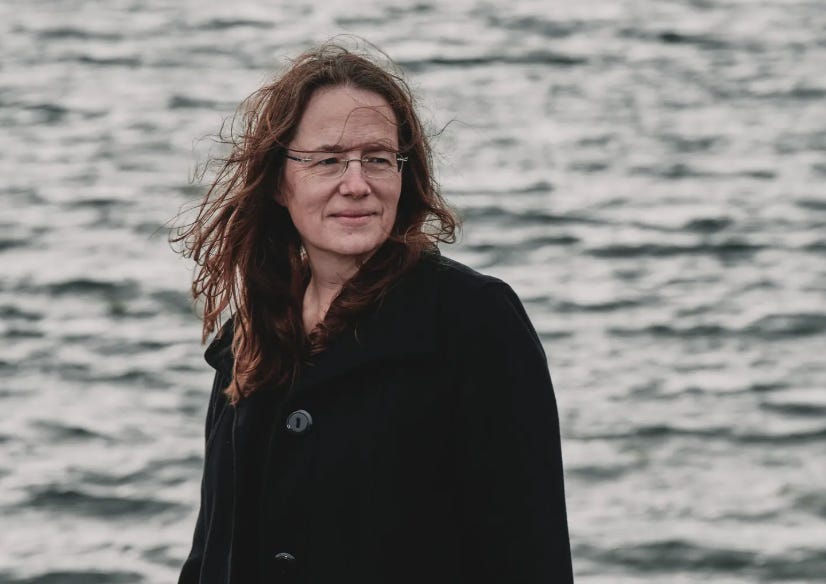
Bio - Professor Heather Cox Richardson
Heather Cox Richardson is professor of history at Boston College and an expert in nineteenth-century America, specializing in politics and economics. Her nightly newsletter, Letters from an American, reaches 7 million readers.
Professor Richardson’s early work focused on the transformation of political ideology from the Civil War to the presidency of Theodore Roosevelt. It examined issues of race, economics, westward expansion, and the construction of the concept of an American middle class. Heather’s award-winning books span subjects from the Civil War and Reconstruction to the Gilded Age, the American West and the history of the Republican Party through the Trump administration. She is the author, most recently, of the best-selling Democracy Awakening: Notes on the State of America.
Her American Conversations series is available on YouTube, Substack, and Facebook. 250 to 250, a project designed to mark the 250th anniversary of the Declaration of Independence, airs on multiple social media platforms.
Learn more about HCR here.
Transcript - Simon Rosenberg And Heather Cox Richardson (6/29/26)
Simon Rosenberg:
Welcome everyone. We're going to let people kind of wander in here now in the next few minutes. We're back with a really special event – the kickoff to a series of conversations about America at 250, and who better to join us and to kick this off than the great Heather Cox Richardson. Welcome, Heather, thank you so much for being with us today.
Heather Cox Richardson:
Thank you for having me, Simon. Always love talking to you.
Simon Rosenberg:
Listen, I want you to know, I founded Hopium in a large part due to you, actually. I mean, the success that you had, the inspiration of your incredible newsletter every day gave me belief that I could do something like I wanted to do on Substack. And so thank you for the inspiration… and for being with us today.
Heather Cox Richardson:
Oh, that’s lovely.
Simon Rosenberg:
Let's do two things to start off. One, you have a new series you're doing that looks amazing and I've seen a few of them. It's called 250 to 250. Do you want to talk a little bit about that before we get into the more meaty conversation here?
Heather Cox Richardson:
Yes I'd love to because in fact that's sort of our whole approach to the 250th anniversary of the signing of the Declaration of Independence – that while there was so much confusion and so much noise around the event itself, especially coming from the White House, my team said why don't we just do something that looks like the bicentennial minutes from 1976 except focusing on the different ways that Americans in the past have embodied American history and have changed the world as individuals. And so we're looking at events, we're looking at places and we're looking at people who changed the country.
And the fun part about it is that they are not they’re not pollyanna videos… they are the stories of how people overcame adversity, of one sort or another. Which is really the heart of America and they've turned out… you know, I just can't even tell you how much work they are, but they have turned out far better than I expected so we're really proud of them.
Simon Rosenberg:
Give us an example of one of your favorites so far. You know, I used to be a TV producer and writer before I went into politics and these kinds of things are always easier in the abstract [than] when you actually go go make them…
Heather Cox Richardson:
Well, so we only have 124 words – a maximum of 124 words. We're trying to explain something, why it's important and how some individual or group made the change that we're identifying. And let me tell you in 124 words that's brutal. We've got a team of writers, we have a lot of editors… many of them are great.
But I have to say the Obergefell decision is the one that was a game changer for me. That is – working on such tiny little canvases, I wasn't at all sure we could do something as big as we were trying to do because, you know, the Bicentennial Minutes had a different conceit. You were marching up to the Declaration. And if you're trying to do the whole sweep of American history, and do individual pieces of it from all over the map, it's a bigger assignment in a lot of ways. And I started to watch the one about the Obergefell decision, the one in which the Supreme Court recognized the constitutionality of gay marriage. And I did not know who they had gotten to do the narration. And I'm watching it and I'm listening to the script because that's what I do. And I'm thinking, who is this guy? Like, who is this guy? He goes, I'm Jim Obergefell. And all of a sudden it clicked for me… these Supreme Court decisions… you know they're important to individuals, but… I can tell you about the Dred Scott decision, Pollock v. Farmer's Loan… all these big decisions… but all of a sudden, that whole decision came down to Jim Obergefell. And his husband. And I just thought it was so powerful… that sense that really an individual can change the world really jumps out of that one.
Simon Rosenberg:
We'll be promoting this heavily. Our current moment in time… you know, we see these empty pictures of the mall, and Trump's partisan party that he's having for himself. Like the last big party he had for himself where nobody showed up. He's having another one. And I wonder… you know, I'm a lifer DC guy. I grew up in Connecticut, I went to Tufts, I'm a Yankee by by birth and so on. But I've lived here since 1992. I came here with Bill Clinton in the summer of 1992 when we won the primary. And I've been here ever since. And so the attacks on the city itself have been very personal to me. You know, my wife worked in the White House in the last administration. I've been around the White House quite a bit over these years.
We are in such a remarkable moment now in our history. I don't think where we thought we would be at 250. How do you make sense of all this right now, Heather… where we are, how we should be thinking about where America is at 250, in addition to the moments of overcoming, you know, where are we today here in the U.S.?
Heather Cox Richardson:
Our democracy is under siege. I mean, quite obviously, not only from the elected representatives in the White House and in the Congress, but also from the appointees that Trump has put in place. And also, crucially, at the Supreme Court.
And that attack on our democratic system in order to concentrate wealth and power among a very small group of people looks a lot like other moments in our past, for sure the 1850s, the 1890s around the turn of the last century and the 1920s. But what we have now is really a president in power who is doing everything he can in tandem with the Supreme Court to overturn the system that we have built since 1933. And to turn what is really extraordinary American wealth – and I don't mean money – I mean lives that are worth living because of family, and faith, and education or whatever is important to you to make you feel like you're living the life that you want to live. We're watching people turn that into money and put it in their own pockets. And so in that we are in a different moment than we have been before.
And that is absolutely the case. But one of the things that I find exciting in this moment, and one of the reasons I read Hopium, is because we are watching the American people remember the values under which our democracy was formed. And finding new ways to express that, and to push back against the idea of tyranny – in the same way the founders did. And when they do that as they did in the 1860s, and again in the 1890s in the early progressive era, and then again in the 1930s and going forward, what we tend to do is to remake American democracy to overcome the new problems that have arisen. Westward expansion, industrialization, a global economy, a nuclearized world… when we do that, we tend to make democracy more able to adjust to the new things coming over the horizon, in this case, like climate change, like migration, and disease and all the things that right now we have to adjust for.
So where I see us right now is sort of on a knife edge between a renewed, healthier democracy and authoritarianism. You know, I always look at a moment like this at where the momentum is, and it sure looks as if the momentum is on the side of the American people.
Simon Rosenberg:
You know, I call it Greater MAGA, which is Trump, Orban and Putin, and even to a degree Bibi Netanyahu. What's remarkable about this moment, as I kind of balance on the knife's edge, is how much the momentum is slipping away from Greater MAGA. I mean, you've seen now Bibi, Putin and Trump all suffer, their political projects are suffering because of their failed war and their general narcissism and everything else that's happened in their countries. You saw Orban fall. We saw this weekend the Serbian leader resign after protests. Part of what I take solace in at this moment is watching the struggle of Greater MAGA and Trump. As a political analyst, I mean, Trump and the Republicans are in really grave danger in these elections. We have the opportunity… if we work hard and do what we need to go do to have the election results that we all want to have this November… as you pointed out, there's both this sense of struggle but also opportunity that's ahead of us and that we need to seize together.
Heather Cox Richardson:
Yeah, and I'm with you. That's what gives me hope as well. But the flip side of that, and what I think a lot of people are feeling now, is [that] we're tired. This has gone on now for almost a decade. And at this point, as you say, people like Trump and certainly Vladimir Putin [are] on the ropes. And I think around Trump, with him appearing to crumble the way he is, those people who are depending on him to keep them in power – they're going to get more aggressive rather than less. Fortunately, we're all finding our feet and we're making connections so that we can continue to push back, but I think for a lot of people… it’s like, really?
This morning… the Supreme Court handing down what is essentially the gutting of the U.S. government that has been in place since the the 1930s is really shocking, coming as it does with the attempt of the OMB Director Russell Vought to change our merit-based system of awarding federal grants to turning it into a political system, so that we will end up with a pipeline into the government and into our science and so on that is determined by their political ideology. Even though it is a small minority of the American people. So you're watching this on the one hand and you're thinking, really? Do we really have to take this on now? And then we look around and we say, well, yes, we do. And one of the things that's doing is creating new alliances and new abilities to push back. Anyway, what do you think?
Simon Rosenberg:
Yeah… I do agree. And I think one of the things that just sticks with me, Heather, is that at Hopium, we're very focused on candidates and party committees. It's sort of our lane, and because I come from traditional Democratic politics. And I've interviewed in the last couple of months every major candidate running for the House and Senate in a battleground state or district in the whole country. And, you know, those interviews are available on our site. They're free for anyone to watch. I've been struck by a couple things.
One is that, first of all, we're competitive in Senate races in states that Trump won by 13, 15, you know, even more points, which is just a huge shift in the public. I mean, the repudiation of him, the rejection of his politics… which could have been otherwise… has been remarkable. Even just this weekend Sherrod Brown had a new poll by Trump's own pollster showing him up three points in Ohio – a state that we lost by 11 points. We're leading in Alaska, we're competitive in Texas and Iowa, so first of all, the battlefield has shifted so much in our favor…
But the second thing… one of the things I'm finding about our candidates is that there's a theme running through our candidates this cycle that has emerged, I think, which is around an embrace of virtue. That one of the ways we're positioning ourselves in opposition to Trump is in people running who have done virtuous things, whether it's a firefighter, or a teacher, or a doctor like Amy Acton in Ohio. People who have served in the military. There's a new politics emerging in the Democratic Party I think this cycle that is very encouraging to me about creating a brighter contrast. And I think it's happened organically. I mean, you know this, you're a student of history, obviously, and things just emerge each cycle – new words, new language, people like Jon Ossoff and James Talarico who I think are really carving out new space for us rhetorically. And I think what we're seeing is a new Democratic Party being born in front of our eyes that feels stronger, more grounded and more confident, that is competing in red states and red places where we just couldn't compete over the last 15 to 20 years.
And so I'm seeing… despite all the noise that we hear in our politics every day… the people that we're spending time with and we're supporting – it feels good, Heather. It feels good around the country. And I think they feel the support. The way I describe this is that we're interviewing candidates who know they're connecting with their constituents and their voters. They have that confidence that comes from being out with people and knowing that their message is working and connecting.
I'm optimistic on two fronts… one is that they have stumbled, and we've been given a real shot and the country's clearly rejected him, but the second thing is I think we're seeing bits and starts of a new party, you know, being born, from this new dynamic mayor of New York to Mary Peltola in Alaska. It feels like America. It's diverse. It's broad. It's ambitious. It's interesting. It's what I think we all would have wanted this cycle.
Heather Cox Richardson:
You know, after the Obama Presidential Center opened last week, I read somebody who said, how could the country both have elected this man and Donald Trump? And I'd love to hear what you think about this. My first reaction was, well, the country didn't… in the sense that people who voted for Trump looked at Barack Obama as somebody who was unserious. And, you know, you could just have this whole list of the sort of negative adjectives that Newt Gingrich's Political Action Committee put out many years ago to tar the Democrats – being traitors and weak, and anti-American, stupid, and all of those words. And one of the things that I think about when I think about how we have gotten to where we are is the rise of right wing media beginning in 1988, of course, with the taking off of talk radio.
That quickly became political. It didn't begin as political – it actually in part began as an attempt to find a use for AM radio when FM radio was really showing how much superior it was to AM. But quickly it got into its political lane, and then with the takeoff of the Fox News Channel, where the people who are still fervently defending Trump now often don't have any idea of what's really happening in the world. And one of of the things… when you talk about people connecting at the local level as they are… simply going out into the community and saying, listen, this is what's really going on…
We have a number of organizations now that are helping people who have been consumed by MAGA actually learn what is really happening. And that feels to me like a much longer fight that we have been in. And finally, those of us who care about democracy are are gaining some traction in the media space. But what that means is that people are better equipped then to say to their neighbor, you know, no, Barack Obama was not the first guy to wear a tan suit in the White House [Simon laughs], and being able to push back on that… this will not be a short transition of course. That we’re not just looking at ‘26, there's ‘28, and then there's ‘30 and there's ‘32 and so on. But what really jumps out to me is at the end of the first Gilded Age when the robber barons really had sewn up the traditional media, and Congress and the Supreme Court, it was actually the rise of independent media picnics, other ways to get out information, good information about what was really happening that had people turning up first in the 1890s to vote for the alliance, and then for the Populist party, then merging with both the reformed Democrats and the reformed Republicans to create the Progressive Era.
It's a long process. But it is also a process that shows a ground change rather than simply, you know, let's look for the next election and then we're going to swing back and forth.
Simon Rosenberg:
Well, and I'll tell you that, consistent with what you're saying, again, I want to just reflect on what I've heard from the candidates who are out there, you know, in the National Party, because of Republican financial advantages and because of the way you run campaigns, it became easier to run a fewer number of campaigns that spent more money than running everywhere with smaller amounts of money. It's a fact of just complexity, right? It's easier to do a smaller number of things a few times than lots of little things over time. And I think there became ingrained in our culture a lack of ambition. And that we left behind too many communities, too many voters, too many states under this rigor of targeting that we did. And what's happening this time is you're hearing people say, you know, I'm going into communities now that haven't voted Democratic in 20 years, and they're open to us now.
They're ready to hear from us because of this sense of betrayal. It's particularly acute in places where the farm economy has taken such a huge hit. I think this is where Trump has made a really huge strategic miscalculation in giving us an opportunity… it's not a done deal… to go reach and speak to people who feel very betrayed by him. And again, Heather, you know politics, we're only talking about small shifts [that] can have a huge difference. We're not talking about a whole scale repudiation, but you know, if the farm economy parts of the country shift by five points, it's deeply consequential. So I agree with you that part of what is going on is for some people who've been in the bubble the Fox News bubble, in the right wing bubble, their own lived experience the last 18 months is challenging that… it's creating an opportunity for us to speak to people, to go to places that we haven't really been to. And just showing up matters. People care that our candidates are coming and fighting for their vote because they feel like they haven't heard from Democrats. So that's also part of this process that you're describing – trying to shrink the bubble and to increase the ability of fact-based media, the real world, to break into this Fox News bubble.
I will say one thing – I was a regular commentator on Fox for 17 years and I was unpaid. I did two to three days a week because I wanted to show them that Democrats could be smart and thoughtful. I watched the evolution of everything you're describing. In many early days of my appearances, the people I was on with almost all the time were right wing talk radio show hosts. Fox basically dove into the right wing talk radio that you're talking about, and pulled those audiences into Fox in a deeply strategic manner over a long period of time. So you're right that the origins of all this really was in this AM right-wing Rush Limbaugh talk radio space… but there were hundreds of these guys. It wasn't just one big guy. I mean, they were everywhere in every community across the country.
Heather Cox Richardson:
Still are, by the way. I listen to talk radio not frequently, but I do listen to talk radio up here where I live. And you know what they are telling their audiences is just wrong. It's just a lie, which is one of the reasons I don't listen to it a lot – because I get so mad. One of the things you're identifying though that I think is so important both at a large level and at a small level in the present… is what you are emphasizing… the idea of agency, of human agency to change our political system. And going out into communities and saying, what do you want you know? What are you going to do? What are you interested in changing about what we're doing? And I cannot tell you how many people have come up to me in the last four years and said, you know, I ran for school board. I ran for, you know, my local town council. I'm running for whatever… I've gone back to school… I've started a group of people who write postcards.
And that idea of reclaiming American democracy is perfect, again, for the celebration of the 250th, because I think that one of the things that it has given us is a politics that doesn't necessarily respond to the people. But the second thing it has given us is the sense that the American people are just sort of the consumers, or the recipients of government action. And so we sort of seem to swing from, I hate the president… I love this candidate… I hate the president… I love this candidate. Whereas when you have a stake in the system because you are part of it, you are more likely to say, hey, I did not like that decision, but I understand why he made it. And I'm not going to abandon this person as the devil incarnate because I disagreed with that one position. And we'll see if that manages to smooth out our system a little bit going forward… certainly it feels that way to me – that more people are involved personally in the local, the state and then the national level.
Simon Rosenberg:
Well, you know, even just using the metric of donations and donors, right. One way of looking at this… we had two million more donors I think in 2024 than we did in in 2020. There was a huge increase of just people giving 10 bucks, 25 bucks, and what that's done is that it's allowed us to build a politics on our side that is really people-based. I mean, one of the things that's been interesting about the candidates that are running the cycle is many of them are not people of means, right? They're people that have been ministers and firefighters and teachers, high school teachers, right? A government teacher. And this is also a change.
Part of the reason that's possible is because of the Democratic grassroots and the people who've been taking agency. Anyone who runs now in a competitive House race can raise millions of dollars, enough money to be competitive. And that simply just was not true six years ago, eight years ago. And it's created an opening, a wider aperture of the kind of people who can emerge for us that feel more connected and grounded to their communities. I often talk about how the way our politics is structured reflect the ideologies of the two parties, right. We are very people-generated – our money comes from everyday people – the volunteers, the postcarding really drives our energy. Their politics is funded by a couple hundred people and it speaks to the nature of the ideology of both parties right now.
Heather Cox Richardson:
Well, then to go back to what you were saying earlier about the changing Democratic Party and the fact that it's more active now in rural areas than it's been for a while – it's been something I've been watching really closely. Because if you think of somebody like Rob Sand or Josh Turek in Iowa, or Dan Osborn in Nebraska, what you're seeing is something that they are calling prairie populism. But their prairie populism actually maps really well over the period of America from as I say 1933 to 1981, as it does with a lot of what Zohran Mamdani is doing, and the people who are calling themselves progressives in urban areas. They are looking at breaking up monopolies that make it impossible for people to break into new fields, so it's good for entrepreneurs, it's good for consumers, it's good for labor, for farmers, but also to try and make sure we don't get the monopolization of wealth that we have seen. That we have resources in rural areas as well as in urban areas – hospitals, education and so on. And the reason I point that out is because these broad based ideological positions – that the government should help ordinary people, and it should do so with the kinds of programs that make it possible for people to determine their own future – those broad based ideological shifts where people make connections across all sorts of American divisions is the one that you see coming out of the 1850s, the 1890s and the 1920s that reworked American democracy.
When people finally said hey wait a minute… they they keep dividing us, so we don't actually use the government for our own ends, and they get everything. When we do that we tend to see a real rebirth of American democracy. And every time I think about that, I think of that ad the first time Josh Turek came across my radar screen. The ad where he is knocking on doors and in order to get to the doors, he is dragging his wheelchair up hills and upstairs. And you think, that's a man who really, really cares about his community. And that's incredibly impressive – aside from the gold medals and the Paralympics and all that, which brings up a comparison of course to somebody like Madison Cawthorn, the former representative from North Carolina who kept saying that he was part of the Paralympic process and everyone's like, who are you? And he just kind of wanted the title without actually doing any of the work.
Simon Rosenberg:
And Heather, I know we're running up on time because this is a busy week for you, and I'm grateful that you've spent time with us today to kick off this series. To put an exclamation on something you just said… I'm not an historian, but I've been doing this long enough that I've stumbled across a few things… we talk a lot about the Gettysburg Address here. And about the unfinished work in front of us that Lincoln talked about – having a new birth of freedom here and everywhere.
And when I talk to my community and when I do my public talks and I’m like, what are we doing? What is the fight that we're in? This idea of a new birth of freedom here and everywhere around the world was a future that we have to, I think, envision together and then go build a politics to make it so. Despite my feeling a little down today, on sort of the struggle of what's happening here in Washington, I do think at a structural level we've made incredible progress in the last 18 months.
And I'm very I'm grateful for your continued leadership. You know, your Substack has been an inspiration to so many of us every day. And this new series you've launched is incredible. So thank you for your indefatigable work ethic. You're staying in the fight every day, and for leading us through this dark time so elegantly and beautifully. With such inspiration to so many others, to all of us. So thanks for being with us today.
Heather Cox Richardson:
Well, thank you so much for that, Simon. But the coolest part of all of this is meeting people like you and everybody else in this work because that's what American democracy is all about. And I feel like the luckiest person on Earth that I get to be part of this moment where we re-figure out what it means to be an American. And what American democracy should look like. So thank you for being leading as well, and being part of the whole process.
Simon Rosenberg:
I do share your sense of luck. And I have enormous gratitude at this point in my life that this is the work I can be doing. It’s great to be in partnership with you, Heather. Keep up the great fight. Thanks for being with us.
Heather Cox Richardson:
Thanks for having me.
Simon Rosenberg:
Thanks, everybody. If you enjoyed this conversation today, please hit like so more people will see it. Subscribe to Hopium. I assume almost everyone who's going to see this already is a follower of Heather's, but you can follow her at Letters from an American. The iconic Substack that she runs every day. It's incredible, her productivity… and just thanks everybody. We stay in the fight because we have an election to win, a country to save, and a future to secure for our kids and grandkids, together. Thanks everybody.