


Greetings everyone. Sharing a new discussion I hosted this afternoon with. Dr. Phillips O’Brien, a noted historian and Professor of Strategic Studies at the University of St Andrews. His insightful commentary has caught my eye these last few months and I’m grateful he was able to spend some time with us today. A video recording of our discussion is above, and a full transcript is below.
We cover a lot of ground in our discussion - what’s next for Europe and Ukraine after the Munich Security Conference; Ukraine’s remarkable success against Russia this past year; what Trump might be up to with Iran; how important Democrats winning these November elections is for democracy here in the US and all around the world.
What turned me into a true Phillips O’Brien fan has been his clear-eyed assessment of what Trump was up to with his Ukrainian “Peace Negotiations.” From our discussion:
These are not peace negotiations. This is the thing that really bugs me, Simon, is that these are not peace negotiations. And when Trump says, oh, he wants to stop the killing…Trump could care less about the killing. He doesn’t really care about Ukrainian lives at all or Russian lives. It’s an irrelevance to him. What he is trying to do is, I think, twofold.
One, he’s trying to get a really good deal for Putin. He wants to get back to work with Russia. He doesn’t care about Ukraine. Trump could give two figs for Ukraine…just doesn’t care about Ukraine. He hates Zelensky, by the way, but really doesn’t care about Ukraine. So what Trump is trying to do is get a good deal, the best deal possible for Putin. And if he can’t get Putin a great deal to help Putin keep the war going, then secondly, probably get some business deals and money flowing in at the end of the thing. That’s what matters. Everything else is just window dressing. So I get quite frustrated with the way that this is being reported as if Trump is some kind of negotiator between the Ukrainians and the Russians or some kind of person who’s acting out of good intentions. He’s not. The Ukrainians, by the way, I think do understand that the Europeans finally get it. It might be actually that Rubio’s speech, once that sunk in, because what has happened today is there were reports the Europeans are now trying to provide real support to Ukraine in these sham talks and demand things from the Russians.
But what Trump has done, and by the way, I think Trump has done it quite impressively…when people underestimate Trump and call him a buffoon…he’s a scarily good politician. He frightens me. I mean, I think we have to sit back and say Trump is actually one of the most effective political figures in US history. What he has done is maneuvered the Ukrainians into a very bad position. He’s helped Putin a great deal, and he’s sidelined the Europeans, as you said. So that’s where we are in these negotiations. They’re not negotiations for peace. I think that’s the thing that has to be said more than anything.
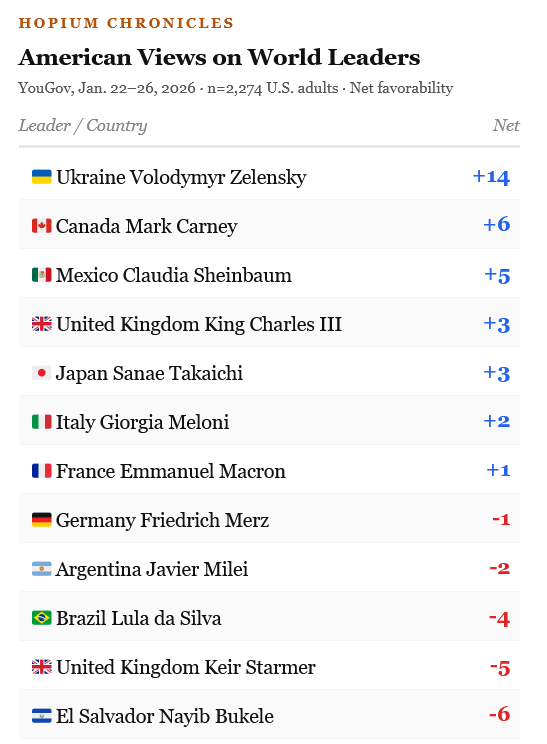
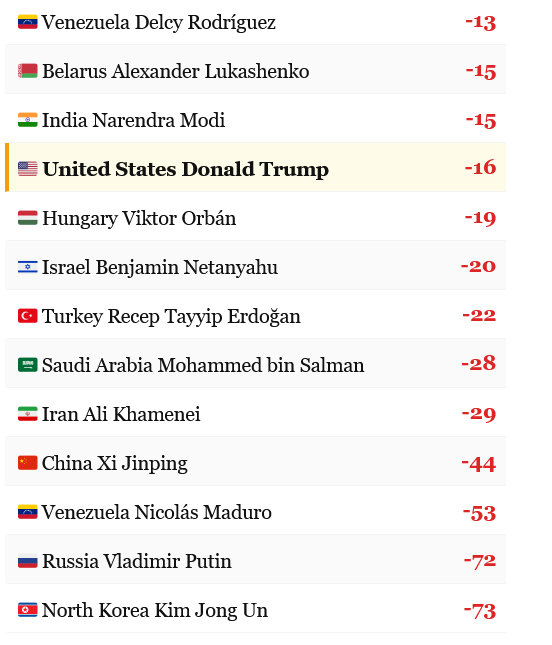
In our conversation I offered that one reason that Trump has created this false frame of “peace negotiations” is to maliciously hide his true intent from the public and stave off Congressional actions against Russia, for he is aware how unpopular Putin is in the US, and how much support Zelenskyy and Ukraine have. Here’s the new YouGov poll we discuss, and the favorability of the main actors:
+ 13 Zelensky
- 16 Trump
- 72 Putin
I am now a subscriber to Professor O’Brien’s newsletter on Substack and encourage you to check it out. He has become an important teacher of mine in this challenging moment, and I’m pleased he was able to drop by and spend some time with us today. Do get to our discussion when you can - it is a timely and important one.
Keep working hard all. Lots of work ahead - Simon
Related Hopium Video Discussions and Posts
Trump foreign policy discussions with Senator Chris Coons, Senator Jeanne Shaheen, and Congressman Adam Smith
Biography - Dr. Phillips P. O’Brien
Phillips Payson O’Brien is a Professor of Strategic Studies at the University of St Andrews in Fife, Scotland. Born and raised in Boston, he graduated from Trinity College in Hartford, Connecticut before working on Wall Street for two years. He earned a PhD in British and American politics and naval policy before being selected as Cambridge University’s Mellon Research Fellow in American History, and a Drapers Research Fellow at Pembroke College. Formerly at the University of Glasgow, he moved to St Andrews in 2016.
At St Andrews, O’Brien is chair of the School of International Relations. He has published widely on issues of conflict, politics, war, and strategy in the twentieth and twenty-first centuries. Among his books are How the War Was Won: Air-Sea Power and Allied Victory in World War II (Cambridge University Press, 2015) and The Second Most Powerful Man in the World: The Life of Admiral William D. Leahy, FDR’s Chief of Staff (Penguin Random House, 2015). He has also published multiple articles in major journals including Foreign Affairs, Diplomatic History, the Journal of Strategic Studies, and Past & Present. He has worked with scholars and analysts in Ukraine, throughout the rest of Europe, and across the Atlantic to try and digest some of the lessons of the war and to understand why the prewar analysis was so fundamentally flawed. His commentary has been published regularly in The Atlantic, The Times, The Spectator, The Telegraph, and other major newspapers and journals, while he has made media appearances for outlets in more than 15 countries, including MSNBC, CNN, NPR, BBC, DW, and L’Express.

Transcript - Simon Rosenberg And Phillips P. O’Brien
Simon Rosenberg:
Welcome, everyone. Simon Rosenberg, Hopium Chronicles, back with a great event today. Joining me is Professor Phillips O'Brien. Welcome, Professor. Thank you for being here today.
Phillips O’Brien:
Delighted to be here, Simon.
Simon Rosenberg:
So, you know, we have these people in this modern world that we follow and we read and we learn from. In this struggle that we have been in, I've learned from Timothy Snyder and Ruth Ben Ghiat and Heather Cox Richardson. In recent months, one of my great teachers has been Professor O'Brien. It's really a pleasure for me to have you here today. I read your commentary and I've been learning a lot from you. You're a professor now at University of St. Andrews, and you write about grand strategy, war and history. In a moment like this, where the global system that we've had in place for 80 years is now moving into something other than that, and in a moment of transition, I think your perspective has been particularly valuable to me. Thank you for coming on today.
I wanted to start with Munich and just your initial impressions about where we are with Russia, Europe, Ukraine, the US. There are reports that, not surprisingly, the Trump negotiations with Russia and Ukraine aren't going the way that Trump wants because, obviously, Zelensky is never going to agree to anything that Trump really wants out of this deal. But what's your sense from having listened to the speeches in Munich and just where we are in the transatlantic alliance and also with Ukraine?
Phillips O’Brien:
That's a great way to begin. Looking at Munich, what I would do is divide it into three groups of reactions or three groups of actors.
There's Rubio and the administration that presented something. I would say there was a very interesting reaction from some Democrats who were there, like Senator Mark Kelly. And then there was, of course, the European reaction. What Rubio was doing was Vance with a smile. I mean, there's a lot of rhetoric about transatlantic history, though in a really weird backward kind of way, in a way that Franklin Roosevelt would have thought was very strange, the way Rubio was referring to a sort of a mythical idea of history. But if you got beyond the bouquets of flowers that Rubio threw with the Europeans, what you saw was pure MAGA. It was all about breaking down the European Union, establishing Europe as nation states, that the real subtext for Europe was – don't be united, break up into your individual states and let us dominate you, don't be good to immigrants. It was MAGA across the board… is what Rubio was presenting to the Europeans. So it wasn't really much of a change. In fact, it would be very similar to what you see in the national security strategy that was released in November. So the administration's position, I don't think changed at all, based on where it was before, just with occasional nice words.
Now, the European reaction was fascinating. I was one of those who sort of originally hung my head when the speech was given because the immediate reaction for a few hours was, oh, you know, the olive branch being handed out by Rubio. People applauded in the room and they talked about Europeans being relieved. And I think in the room at the time, some people did fall for the con, as we might call it, the Trump-Rubio con that was given. But what is interesting is once people saw the reaction for those who were critical, they sort of thought, yeah, maybe we got to step back here. So I think the European reaction has been far more sober after the first few hours than it was to begin with, and that the Europeans finally seem to get it. There have been sort of real tensions within Europe about how to react to Trump, but they finally seem to get more of the idea that, hey, you know, these people are not your friends. These are not going to be Atlanticists. These are not going to be real strong NATO supporters. This actually is what you'd call the populist right that is trying to subvert what Europe has become. So the European reaction was, you might say, at first, maybe a rush of relief. But that relief is gone. I don't think anyone now would look back and say, oh yeah, Rubio was really handing out an olive branch to us. The two reactions seem to be either — 1) we didn't believe it, or 2) okay, maybe we pretended to be polite, but we don't. So I actually think the European reaction hasn't been bad, once the original part wore out.
One thing that I think was also really worth watching was the Democratic reaction. Now, the Democrats had spent some time trying to reassure…actually reassure Europeans before the Rubio speech. Senator Shaheen had given, I think quite an important address to Europeans saying, you know, not all Americans are Trump and that we value this relationship. But Senator Kelly, I think, gave a very interesting reaction afterwards, where he said basically speaking to Europeans, that applause, thinking that, you know, looking for hope from Trump…that's getting pretty tired. And stop pretending that you're living in a world where things haven't changed. And I think that was a very important democratic voice. I think Europeans have been partly foolish, if I were going to use that word, and not realizing that they are coming across too often as far too pro-Trump, far too willing to prostrate themselves to Trump. And so I think that that kind of Democratic response was really interesting. So I break it down into those three things.
Simon Rosenberg:
Well, and Kelly's remarks were similar to Newsom's remarks at Davos, right? Which got a lot of press when that happened, telling the Europeans to wake up and that this is real. It's similar to Mark Carney's speech that he gave at Davos, right? About… we're in this new day…
Then let's take the next step, which is there's continued to be negotiations between the US and Russia, keeping the Europeans separate from this process with Ukraine, which has been extraordinary in itself, that Trump has insisted that the Europeans stay out of what they're doing. Talk a little bit about what you think the latest is, but if you could also introduce us to your theory about the ruse that Trump has been putting on over us for the last year — about what his real intentions are regarding Ukraine.
Phillips O’Brien:
These are not peace negotiations. This is the thing that really bugs me, Simon, is that these are not peace negotiations. And when Trump says, oh, he wants to stop the killing…Trump could care less about the killing. He doesn't really care about Ukrainian lives at all or Russian lives. It's an irrelevance to him. What he is trying to do is, I think, twofold.
One, he's trying to get a really good deal for Putin. He wants to get back to work with Russia. He doesn't care about Ukraine. Trump could give two figs for Ukraine…just doesn't care about Ukraine. He hates Zelensky, by the way, but really doesn't care about Ukraine. So what Trump is trying to do is get a good deal, the best deal possible for Putin. And if he can't get Putin a great deal to help Putin keep the war going, then secondly, probably get some business deals and money flowing in at the end of the thing. That's what matters. Everything else is just window dressing. So I get quite frustrated with the way that this is being reported as if Trump is some kind of negotiator between the Ukrainians and the Russians or some kind of person who's acting out of good intentions. He's not. The Ukrainians, by the way, I think do understand that the Europeans finally get it. It might be actually that Rubio's speech, once that sunk in, because what has happened today is there were reports the Europeans are now trying to provide real support to Ukraine in these sham talks and demand things from the Russians.
But what Trump has done, and by the way, I think Trump has done it quite impressively…when people underestimate Trump and call him a buffoon…he's a scarily good politician. He frightens me. I mean, I think we have to sit back and say Trump is actually one of the most effective political figures in US history. What he has done is maneuvered the Ukrainians into a very bad position. He's helped Putin a great deal, and he's sidelined the Europeans, as you said. So that's where we are in these negotiations. They're not negotiations for peace. I think that's the thing that has to be said more than anything.
Simon Rosenberg:
And I think that one of the reasons that Trump has played this game that you talk about so often is that he knows he's got to keep the Senate and House at bay. He's got to, because there is the sanctions bill that came up last summer…I think 85 co-sponsors in the Senate…Johnson said if that sanctions bill against Russia were to come up to the House, he would pass it. I think there's overwhelming support to continue to put the pressure on Russia. And so Trump has created this game, in my view, this sort of false story about what's happening in order to stall work that would happen in Congress that would make it far more difficult for him to get done what he wanted to get done to help Putin.
Because he's aware of how not only does he not have support for his policy towards Ukraine, in Congress, he doesn't have it even in the Republican Party. And he certainly doesn't have it with voters. I mean, I think one of the most interesting polls that I've seen…there have been two polls that I think are relevant to this conversation. YouGov just did a poll of Americans testing global leaders. And the single most popular of all those was Zelensky, 30 points more popular than Trump, by the way. He was +13. And Putin's approval rating in the US is like 5%. And so Trump is operating in a place where he knows there's no support for what he's doing.
So he's been lying and playing this game with all of us about what his intentions are there, to your point, in a very kind of elaborate way. It's been like a play — he's been playing a character that is completely deceiving and hiding everything underneath. And what's incredible to me is that our government is now essentially aligned with Russia against Ukraine and Europe in a way that has, you know, potentially enormous consequences for us for many years to come.
Phillips O’Brien:
And for freedom around the world. I mean, this is one of the things that he's done…and I think that way you're describing it as a play is a really good way of describing it. What he has done…he's not wanted to provide Ukraine any aid, or the minimum aid he can give them. By the way, he stopped all direct aid. The United States gives Ukraine no aid. But he knows that he can't cut Ukraine off completely. So what he does is he sells tiny amounts to the Europeans through Pearl and makes the Ukrainians and Europeans pay full whack. And then he slows the delivery down. So what he's actually doing to Ukraine is really small…providing very small amounts of armaments, a very sort of truncated period. But he talks big. So that we hear, what was it, in August and September, oh, I might send Tomahawk missiles. [Simon laughs.] And that's when I sort of lost it. I was like, there is no way Trump is going to send a very effective offensive weapons system to Ukraine because that actually could damage Putin. And he's not going to let the Ukrainians damage Putin.
He's just protecting Putin. So he talks about certain things, but in the reality, he just is really, really hamstringing Ukraine. And he's really slowed down the delivery of anti-air weapons. He has helped Putin do all this damage to Ukraine this winter by slowing down deliveries, not handing over that much. And he's played a real important role in the Russian campaign.
Simon Rosenberg:
And you know, there's been talk recently, and I know you've written about this, about the notion that Ukraine is performing better in the war than is sort of the conventional wisdom back here in the U.S., and that Putin is putting the squeeze on Trump to try to get this deal done because things aren't going so well in Russia right now. Give your assessment of all that.
Phillips O’Brien:
Well, if you had said a year ago, that in the next 13 months the United States would in essence change sides…..the Biden administration provided the Ukrainians with between 130 to 140 billion dollars in military aid. That was a massive amount that they provided… and you would say that the United States aid to Ukraine would just come to an end…so that's gone and the Chinese, by the way, were empowered by Trump to provide more for the Russians. So the Chinese are providing more. The United States is switching sides. And that Ukraine would be in that situation…..you'd think, oh, my God, the Ukrainians would be very hard pressed and they would have had a terrible year. But what's interesting is even with those massive geopolitical shifts against Ukraine, Ukrainians have done quite well.
Russian advances have been very small. Casualties have been extremely high, extremely high, and the Ukrainians have also started doing damage to the Russian war economy. What really frustrates me is had Kamala Harris won or someone like Joe Biden had stayed in place, probably Ukraine would be close to winning the war. I mean, Trump has saved Russia by cutting off aid to Ukraine at this vital time. So the Ukrainians are not…I'm saying they're not winning the war right now in the sense that Russia is, they're not about to have a battlefield victory, but they've done much better in 2025 than people thought [they would]. And the Russians are not in the kind of shape you would think they would be with China and the US’ backing.
Simon Rosenberg:
Well, and it is an explanation for why Trump had these manic negotiations over Christmas, right, where after Witkoff and Kushner had met with their Russian counterpart in Miami, that no one took a Christmas break…it seems like in addition to whatever it is — this Board of Peace — what they're doing in Gaza, and whatever he made…which is among the most absurd things that we've all ever seen in our lifetime. I mean, it's almost another bad play, another chapter, or another scene in a terrible play. The story, I think, that's so interesting… take us forward. What do you think happens now with Ukraine and Europe? I know you can't predict the future, but just speculate about what or what should we be looking for? [That’s] perhaps a better way of saying it given that I think Trump is expressing greater frustration, that Zelensky isn't bending the knee and doing what he's being told. The relationship between Zelensky and the Europeans seems to be deepening and strengthening every day. I think they both realize now they're all in it together in a way they didn't really totally understand before. What happens now?
Phillips O’Brien:
Well, I think you're right on that. I don't think Ukraine now will be forced to take a very bad deal. I think what Trump/Putin [had done], and I see them acting together, and they probably talked about this in Anchorage, [what they were] expecting was the Europeans would be supine and they would go along with the Americans and basically bully the Ukrainians to take a very bad deal, to hand over more territory, hand over unconquered territory, accept restrictions on the Ukrainian military, all of these things. And allow the Russians to escape sanctions. I don't see that happening, at least in the short term.
I don't see that — the Europeans are not going to pressure the Ukrainians to take a bad deal. The Ukrainians are tired, but they don't want to take a bad deal either. So I think a lot of it will then come down to will the Europeans not only back Ukraine, but will they help Ukraine strike back and go at the real Achilles heel of the Russian war economy? Russia is economically not a great power. It never has been a great power. It's basically a country the size of Spain or Canada economically. It's not in and of itself that powerful. And the economy is suffering a bit. If the Europeans help the Ukrainians to go after the Russian economy, the Russians will have a hard time generating the new force to keep the war up. And all of a sudden… then the balance of power in any negotiations between Ukraine and Russia starts switching more and more to Ukraine. I'm not very hopeful that there will be a long term peace deal in the next year. By the way, the Ukrainians aren't either. I mean, the Ukrainians, in their view, believe that they are almost now in a perma-state war with Russia, that Russia will be a threat to them for many, many years, regardless of what happens in the short term. But what I think we want to do is see Ukraine put in the best possible situation to secure the best possible kind of ceasefire terms.
Simon Rosenberg:
And, okay, I have lots more questions, but for time purposes, let's jump to the thing that's now stumbling in front of us. You know, I have this theory about Trump, right, that whenever things start slipping away or he feels his power is ebbing, or that his strength and manhood are being challenged, that he has to do something spectacular, right? It's sort of like a junkie putting, you know, stuff into his veins. And so his latest thing is Iran. And what can you tell us about what you think is going to happen?
Phillips O’Brien:
Yeah, I mean, I was wrong. I didn't think he would attack Iran in the first place. So last June when he did it, I was sort of thinking he didn't want to do it…from what I've been told…that he did it in the end because he thought the Israelis were doing really well and therefore he could join the Israelis and have a triumph and wave the flag and say, look how big and powerful I am. He certainly did seem to enjoy dropping those bombs, as he also did enjoy doing the military operations against the Venezuelans. So I think he's lost any inhibitions against using military operations. I think at this point, it's really hard to say what he is going to do because on the one hand, he's got the military force there. He has accumulated the military force to run an operation. The thing that he faces is it's not going to be easy to have a quick win. It's not going to be like Maduro. He's going to try to do something like regime change with air power — that is not easy against an entrenched regime, particularly one now that's had an extra few weeks and months even to prepare since Trump started accumulating the force. We also have to remember that Trump's business partners in the Gulf… they don't want him to do this. So people from whom he has received a great deal of cash and financial benefit are very much against the attacks.
And we don't know how that's going to play in his mind. So it's a really tricky one. My instinct thinks in the end he won't do it unless he feels he has no other option but to roll the dice and go for a big win because there are actually a lot of reasons not to do it.
Simon Rosenberg:
Yeah, and it'll be interesting to see that the State of the Union comes in the middle of all this because he said this afternoon, over the next ten days… we know also that he's done that before… and it's a feint that may allow him to strike quicker. Because people have sort of stepped back. It's very possible he does something before the State of the Union to fundamentally change the dynamic, a very negative dynamic for him now politically. I mean, in my own commentary, what I talk about a lot is that he's had a very bad year electorally and politically. His standing continues to drop. He is having now open rebellion in Congress. The Epstein files have escaped containment and have become far more dangerous to him. And so he has a lot of incentive, I think, to fundamentally change the dynamic before Tuesday night. And so we'll see, even if it's a limited initial strike over the weekend, you know, just to have some bombs being dropped so they can show on Fox News, right, because I think he is worried about keeping his political coalition together.
You saw this week he had his most active week on the high seas, right. They had three incidents in a single week. He needs that power and strength. So, you know, we'll see. And I think it's important for everyone watching, listening, as the professor said, that there's not an obvious sort of thing here to do, right, that's simple and easy, and we'll see what we learn about it. I have two more things I want to cover before you go…talk to us about Witkoff and Kushner.
Phillips O’Brien:
Well, I mean, what's interesting, so one thing I'll say is we overrate Witkoff and Kushner because it's always Trump. One thing that did drive me nuts for a while was everyone was trying to say, ah, it's all Witkoff, and Witkoff is the one cutting the deal with the Russians and almost misleading Trump. Witkoff is a New York real estate guy. He's a business guy with Trump. He's Trump's man. Kushner is Trump's son-in-law. These are Trump's creatures. They're doing exactly what Trump wants. They're just doing it really badly because they're not very skilled diplomats. They don't know how to actually do negotiations on this kind of level. So you might say they're sort of decrepit Trumps. But I don't think they're actors who make a lot of their own decisions. I think they're basically being told by Trump exactly what he wants them to do. The issue we face is they're out of their depth in trying to get it done. So you might say it's Laurel and Hardy negotiating for the United States.
Simon Rosenberg:
[Laughs.] I appreciate references to Laurel and Hardy. I'm grateful for that. The term I've been using for Trump in the last few days is that he's rotting. But we'll see if that's accurate. I had one last thing I wanted to throw out before we go is that, you know, one of the things I've been trying to do…..because I sort of lead troops into battle every day, right? I keep people fighting against the regime and fighting for democracy and freedom. We talked about how the Four Freedoms are sort of this foundational kind of orientation of our community. And I have been… and you're free to sort of, you know, respond to what I'm about to say with skepticism, and I'm giving you permission to be a professor here and give us your honest opinion… but one of the things I've been thinking about a lot, and it gets to what you were talking about with Zelensky and Russia, is that I think we can see over the next…..as the Pax Americana and the global liberal order that we imagine and build starts to recede, and we start entering this new era, whatever it's going to be, this unformed, unnamed era, that there's a general view that the likely scenario here is greater consolidation of autocracy and oligarchy here and around the world…..and what I've been trying to do as a thought exercise is to imagine something different than that, to imagine that over the next nine to ten years that there's a new, as we call it, a new birth of freedom here in America and everywhere. And that we shouldn't accept this idea that it's inevitable that autocracy and oligarchy consolidate, and that we see democracy and freedom to continue to be on the run. I mean, if Russia were to stumble and fall, if we saw the Iranian regime yield, if we see change in Venezuela and Cuba, right, obviously what's going to happen with China is a big factor, and Taiwan is a big factor in all this, but I'm wondering whether or not how you really describe what it is at a grand strategy level…
Where are we all going now? We're leaving this era of the Pax Americana and the 80 years of the Four Freedoms. We're entering a new age. How do you think about it and talk about it, given that in the US, we haven't really, I think, even accepted that we're leaving there yet — that we sort of are leaving this old place. Certainly, the implementation of the tariffs was an enormous sign of [that] attempt for Trump. And so I don't know… just leave us with parting thoughts about how you would describe to your fellow Americans here in the US about how do we think about who we are, where we are going? We are sort of not who we were, but what can we become? And can we start to imagine that it isn't always going to be MAGA leading the way, that there could be an alternative to that?
Phillips O’Brien:
Well, I think we'll know a great deal. And by that — that's not a bad analysis at all. I think we'll know a great deal in November of 2026. We are about to have, and I've been racking my head…are there any other midterm elections in US history I would rate as as important as these in 2026? Maybe the 1862 midterm elections would be as important as this. But we're going to see whether autocracy… because I think this is the chance for autocracy to triumph in the U.S… will be after these midterms if Trump will not respect the result because they will try to corrupt this result. They do not want to have Democrats taking control of the House and even maybe the Senate. That will be something they will fight against and they will use levers against it. If in a sense, democracy wins in 2026, then I think that is a really important moment and it will give confidence and it will change everything. I mean, if the Democrats can take one house of Congress, that provides a basis, a real basis of power to move forward. So I think we're at that cusp.
And that will provide a way to fight back. Now, America will have a long way to go. I mean, one of the problems with what Trump has done is that he has shown how easy it is to corrupt things. And I don't know how we get that genie back in the bottle. That there are billions of dollars being collected by the president's family…billions. How do we stop that going forward so we're going to have to take a birth of democracy, a rebirth of democracy, but then really marry it with some hard headed attempts to rein in corruption because the corruption now that the system can support is so massive that it will take major changes.
Simon Rosenberg:
Yeah, I mean, the reconstruction, reformation, whatever the words are we're going to use to describe what comes after this — it’s going to require extraordinary leadership from us domestically and globally. And I think that one of the things I would love to come back to visit with you again about is I work with the Democratic Party infrastructure, campaign infrastructure, and one of the things that I am talking to them about is how we have to assume that in these Witkoff Kushner negotiations with the Russians…that Russia has been encouraged to do their thing here in our elections, whatever their thing will be. They already did it in 2016. They use hybrid war tactics throughout Europe. And we've now seen the Wagner Group is now starting to deploy kinetic attacks in Europe. And I will tell you as somebody who works in the day-to-day world of Democratic politics, there isn't really a big understanding about the way that hostile foreign powers, despite everything that's happened, could influence and support Trump in what he's doing?
Obviously, given everything you said, one of the realities that we have to face, and we'll wrap up with this, is that you know, for Russia, keeping Trump and the Republicans in power is an existential issue for them to some degree. And we've already seen Russia play a significant role in what happened in 2016 that sort of cemented the Putin-Trump relationship. Because I think Trump sees Putin like the Chamber of Commerce, right, in some ways, [Prof. O’Brien laughs] like a big supporter of his, you know, that he then needs to do business with afterwards to thank them, right? Because he played a significant role. And I think that, you know, now that they've disabled CISA and all these tools that we had to keep foreign governments out of our domestic business here in the U.S., it's sort of open season on our electoral system and our party.
And I'm trying to help create greater resilience and foresight on that internally, but it's something I'd love to come talk to you about at some point in a few weeks, a month from now or so, because I think that we have to stretch our imagination, to your point, about what it is they could actually do in 2026 to maintain power. I think we have to assume they're going to do whatever they possibly can. And they're going to have an extraordinary amount of money behind them, way beyond anything they had before. And so even though the election is heading our direction, and we should feel good about all that, there's this dark cloud, I think out there that we can't take any of this for granted. This isn't a normal midterm. We have to not assume that we're operating in a democratic context any longer… competitive authoritarianism, whatever the words are we're going to use. That imagining is not really what political people do very well. You know, they're hammer and nail, right? And we need to… very quickly, I think, start really starting to put on the table in a strategic way what it is that the battlefield of this election is really going to look like. Because it isn't going to be like any other election that any of us have ever been part of before, in my view.
Phillips O’Brien:
No. I mean, it's going to be the narratives….. huge battles over narrative. Well, before the vote, there's going to be two things. There's going to be voter suppression and narrative control. There's going to be, I think, a real structured campaign to try and pervert this vote. And it will start before the vote even happens. There'll be voter suppression. So there'll be real campaigns to try and get people that Trump doesn't want to vote not to vote and to get his people to vote. And that could be everything from [ICE threatening at the polling box] to voter ID. Whatever he's going to do, there's going to be voter suppression and narrative control.
That's the one thing that I did not understand — how powerful the Russians were at that. I had no idea. If you had told me ten years ago they had the ability to control the narrative in America the way they do clearly control the narrative at times, I would have said no way. But they can do that. So they're going to throw things out there in the story which will be… I'm sure, made up stories about Democratic politicians are going to be out there and there's going to be a lot of fake stuff. They will be throwing out all that to try and corrupt the message. And so there's going to have to be a fight for the next ten months. This is going to go on. It might go on, by the way, until next January.
Simon Rosenberg:
Right.
Phillips O’Brien:
It'll go on until the actual people get seated. And it'll be quite an extraordinary period. Fight for everything. All the time, fight.
Simon Rosenberg:
The way we talk about it here is we have to fight 24/7/365 on as many fronts as possible, and that I think the Democrats fighting on ICE funding is a huge development where we're now sort of recognizing that there is no easy path for us anymore. And that we're going to have to fight with greater intention and greater aggression against him. But this is going to be a year. And I'll take it — this is either equal to 1862 or even more important. And listen, thank you, and how do people find you? How do they stay in touch with your work?
Phillips O’Brien:
Yeah, probably Substack is the way. I was an early adopter. I'm just Phillips's Newsletter. So I've got a very a very simple name, but I can't change it because that's how people know me. So Substack's probably the best way. I mean, I write in The Atlantic and occasionally in Foreign Affairs and books, but the Substack's probably the place to go first.
Simon Rosenberg:
Listen, thanks for coming today. Hopefully we'll have you back. And if there's anything in particular that you think is very relevant to us, just email it to me and I'll include it in our daily.
Phillips O’Brien:
Just don't underestimate the threat, but I don't think your audience probably will. Do not underestimate the threat of what's going to happen in 2026.
Simon Rosenberg:
You know, we are Hopium — hope with a plan. Right, we just don't hope tomorrow will be better, we do the work to make it so. That's our line. But I think that, you know, even in my post today I talked about all the ways that this election is not going to be like other elections. I’m working very hard behind the scenes to help our family be prepared for what's going to happen in addition that we're working on…to try to help us be ready for what will be a very unusual midterm election. And certainly an irregular one, perhaps, is the right word to use. But listen, thank you, Professor. I'm grateful for your work. And I'm also just grateful for your just calling complete bullshit on the Trump dance with Putin, which I think has just been so deeply malevolent and insulting to all of us. And it's a shame that too many Republicans have gone along with the play because we've done a lot of damage by not doing what we needed to do here. So thank you for that work too. Keep up the good work.
Phillips O’Brien:
Thank you, Simon. Keep it up, man.
Simon Rosenberg:
Thank you. Listen, everybody, thank you for being here today. This was an important conversation. I think one of the great joys I’ve had, frankly, in this in the last three years at Hopium is being able to bring into our community people that have been teachers. And have helped me understand and make sense of a challenging time. I mean, one of the lines that I use is that I wanted Hopium to help us all understand the nature of the conflict that we are in today. I think we have struggled to understand the conflict. And Prof. O’Brien has become an important I think — a teacher to me and many others. His Substack is exploding in helping us understand the changing nature of the grand strategy and the grand battle that’s going on.
So hit like, subscribe to Hopium, share with everybody you’ve ever met and keep working hard everybody.


