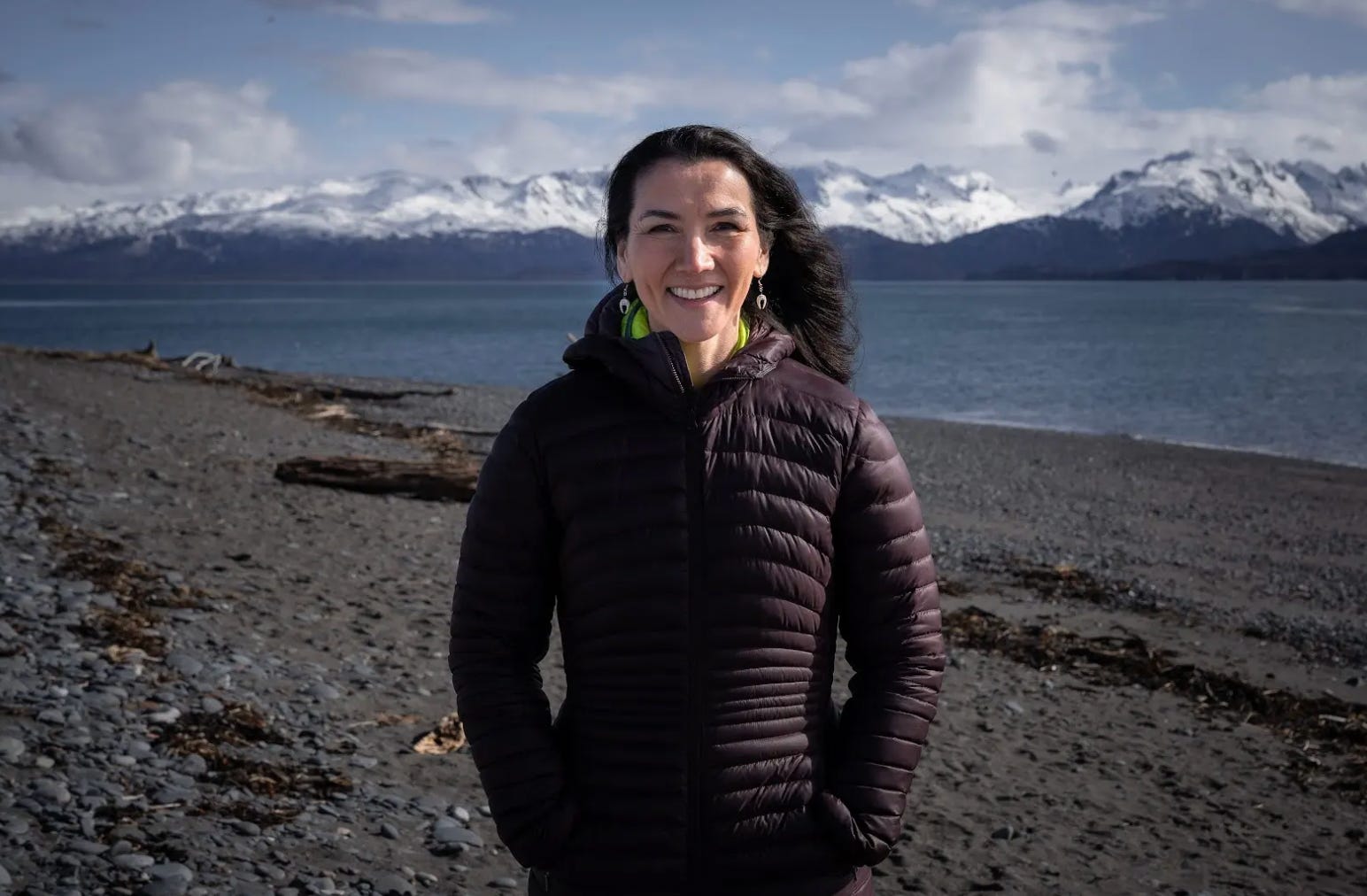
Greetings all. Alaska is a hard state for Democrats, but our great candidate there, Mary Peltola, has made the Alaska Senate race competitive. If you watch our discussion you will see why, and why Democrats are optimistic about this race. A video recording of our discussion is above and a transcript is below.
Here’s some data. Trump won Alaska by 13 points, as did the Republican Senate incumbent, Dan Sullivan, in 2020. In the last three public polls in Alaska Peltola holds slight leads:
49%-47% PPP (for the DSCC)/Jan 16-17, 2026
48%-46.4% Alaska Survey Research/Jan 8-11, 2026
46%-45% Data For Progress/Oct 17-23, 2025
The latest Morning Consult polling of Senate job approval found Sullivan having the third worst net job approval of any Senator:
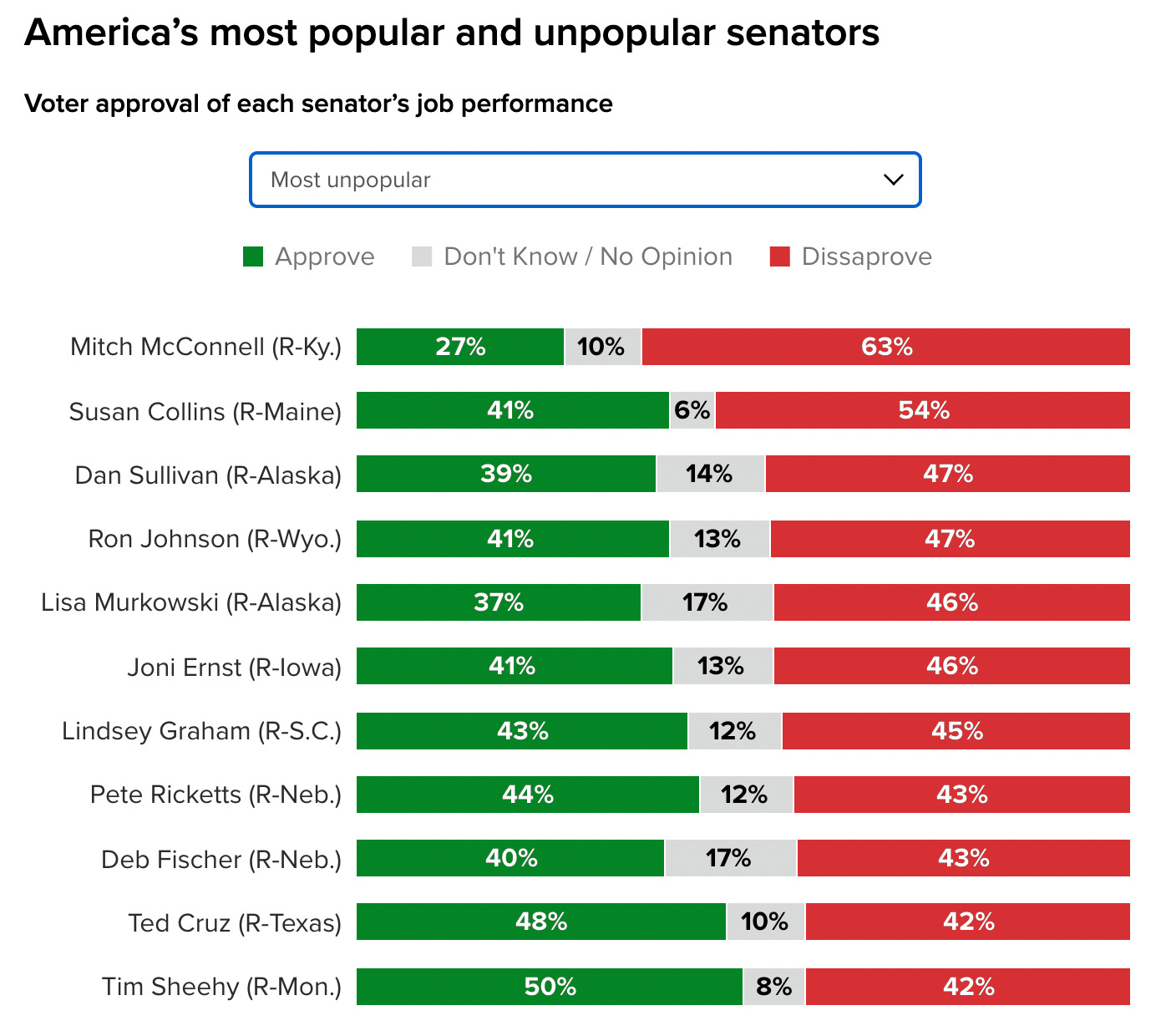
Sullivan’s full on embrace of MAGA, and his votes for the tariffs, the war, gutting health care and food assistance, and ending public broadcasting funding have put him on the wrong side with many Alaska voters. It’s a state that has given us Lisa Murkowski, and in both state legislative chambers, Democrats and Republicans have come together to build a bi-partisan (tri-partisan in the House) majority coalition that isolates the right far. So while Alaska may be a Republican state, it is not a MAGA state, and Sullivan’s embrace of MAGA has left him vulnerable.
To learn more about Alaska’s structural rejection of MAGA listen to our recent interview with Eric Croft, the terrific Democratic Party Chair of Alaska.
There are two ways you can help elect Mary Peltola today - give to her through our Hopium site, or contribute to the Alaska Democratic Party here. The ADP is one of the five states in our Audacious Expansion Fund, and together we’ve become one of the largest investors in the Alaska Party this cycle of any group in the country. Thanks to all of you who have already contributed - but much more to do here!
Here’s the Senate math again. If we hold all our current Senators we start at 47 seats. If we flip ME and NC we get to 49. To get to 51 we need to win two of AK, IA, OH, TX (and perhaps FL, NE) and today there is public, credible polling showing Peltola in Alaska, Brown in Ohio, and Talarico in Texas with slight leads in very close races (Iowa has a June 2 primary, Maine June 9). So flipping the Senate is hard this year, my friends, but not impossible.
Here’s Mary’s announcement video:
Here are a few highlights from our conversation. On why she decided to run:
Well, this is just a real moral moment. And I think there’s something appealing about having a private, quiet life. But I just don’t feel that [in] this moment I could have really sat out this race. I think the largest reason I’m in this race is because I really care. I care about Alaska. I care about Alaskans. I care about what’s happening in our state and in our country.
On how Trump’s policies are making an already expensive place even harder to afford:
Well, and the affordability issue, the word affordability is not new or trending with us. I think, since territorial days, every election cycle Alaskans talk about affordability because whatever it is, you know, a toothbrush or a hairbrush, if you’re buying it in Seattle… in Anchorage, it’s twice as much. In The Bush, it’s three or four times as much. A good example… one of my favorite examples is in Kaktovik, if you buy a container, a 60-tablet container of Advil, it’s $67. You know, these are just not prices that a normal household can sustain. And and those freight costs, those are really scary for us when we see the price of diesel go up. And that’s how all of our commodities worldwide are shipped, whether it’s on a ship or a truck or a jet. All of our things come to us by diesel. And just really another good example… if you’re going to build a house off the road system in Alaska, just a regular three-bedroom rectangular home, in most villages, it’s over a million dollars just to get for the shipping, for the building supplies, and just to stand it up. And again, this just isn’t a scenario where any of us are getting ahead. We’ve always in Alaska lived pretty hand to mouth, but it’s coming to new levels now.
Enjoy this conversation with one our best candidates this cycle, Mary Peltola, and do what you can to help us flip this critical Senate seat this year! - Simon
Bio - Former U.S. Representative Mary Peltola
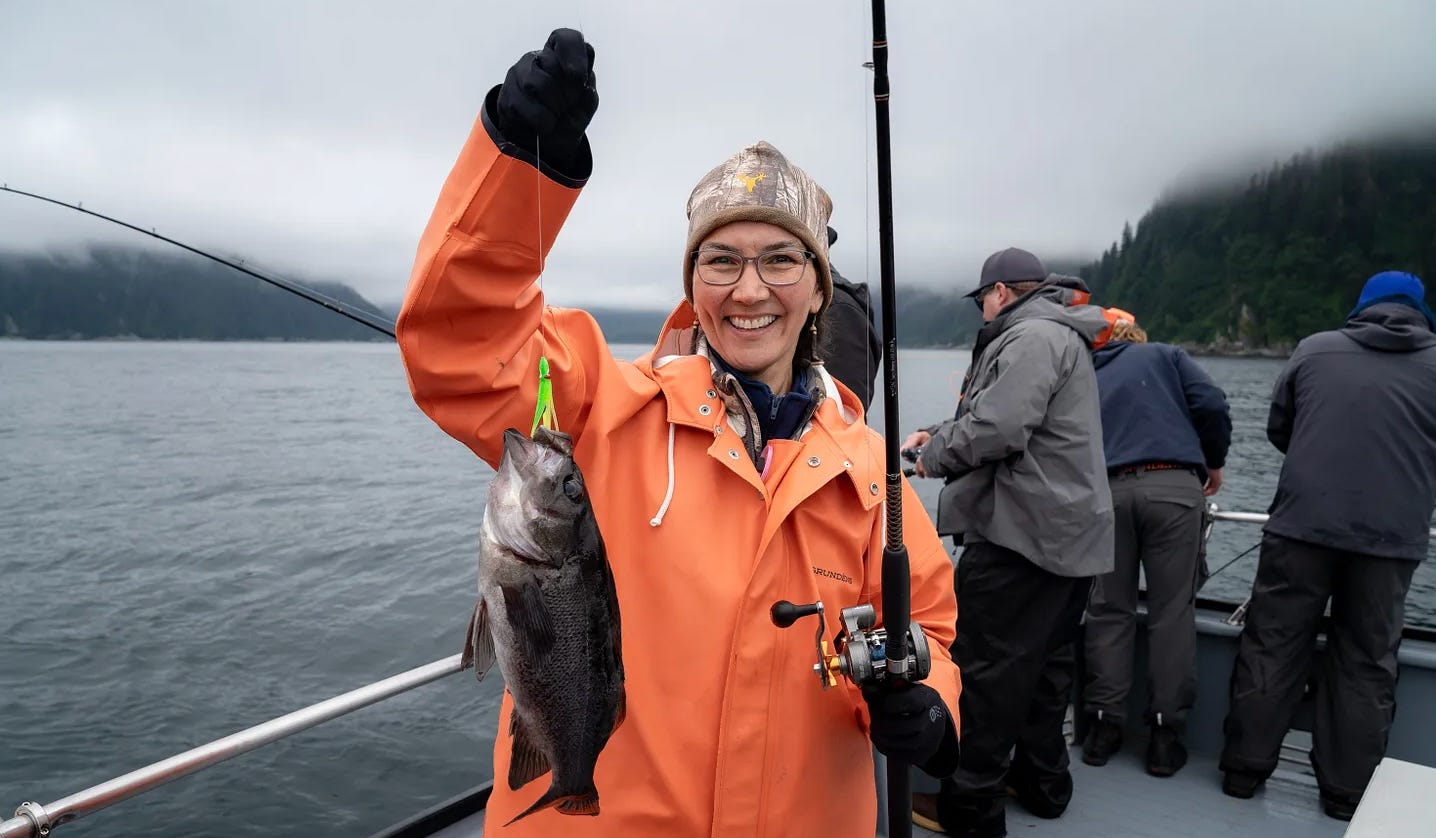
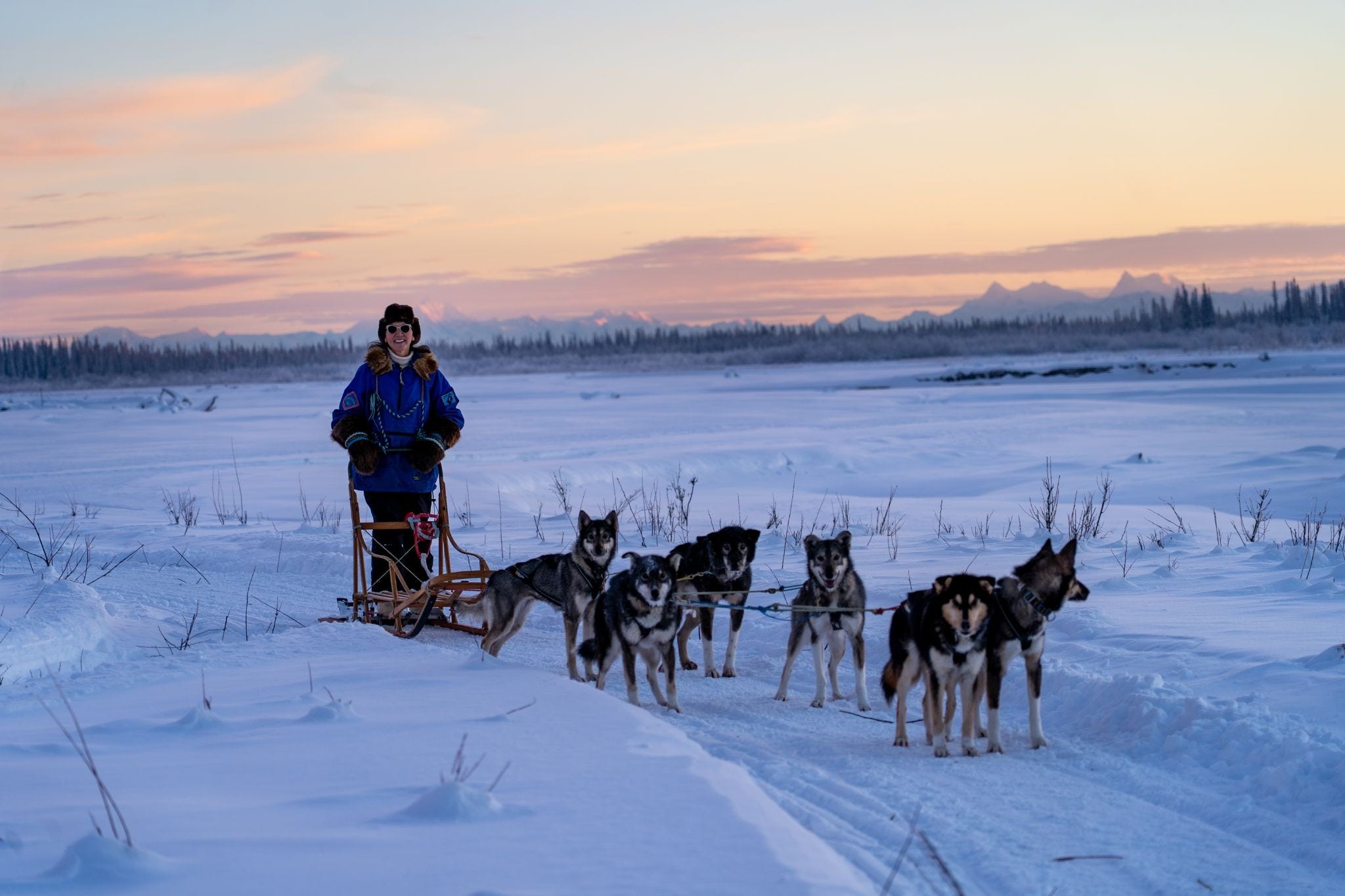
Mary Peltola is a lifelong Alaskan, a mother of seven and a proven champion for all Alaska families. Mary is Yup’ik and grew up in the close-knit communities of Kwethluk, Tuntutuliak, Platinum, and Bethel, where she began fishing with her father at the age of six before becoming a fishing boat captain at age 14, and a herring and salmon technician for the Alaska Department of Fish and Game during college. After being elected to the state legislature at the age of 24, Mary chaired the bipartisan Bush Caucus which helped to pass legislation and influence budgets that improved the lives in rural Alaska. Mary has delivered for Alaska by working across the aisle to secure good paying jobs through the Willow Oil Project; ban foreign trawled fish; and bring home more than $9 billion for Alaska infrastructure, rural broadband, and energy grid improvements.
Mary is running for U.S. Senate, because the politicians in Washington are putting powerful special interests first and leaving Alaskans behind. Mary knows how to win tough races and has won statewide in Alaska before by focusing on her core values of fish, family, and freedom – and she’ll win this race by always putting Alaska first and taking on the rigged system in DC. In the Senate, she will be an independent voice for Alaska and work with anyone or take on anyone, no matter their party, to make life better and more affordable for Alaska families.
Transcript - Simon Rosenberg with U.S. Senate Candidate Mary Peltola (March 11, 2026)
Simon Rosenberg:
Welcome, everyone. Simon Rosenberg back with another great event today. Joining me is Mary Peltola, who is running for the Senate in Alaska. Welcome, Mary.
Mary Peltola: Thank you, Simon. Good to be with you.
Simon Rosenberg:
Listen, we're really excited about this race. We're so glad you got in. I know that your life has been a little busy and bumpy in the last few years. And it's just great that you made the decision in this time of challenge for the country. You've got such a great story. And why don't you tell us just tell us a little bit about yourself and why you decided to run?
Mary Peltola:
Sure. Thank you, Simon. So I had the pleasure, the blessing of being raised in three real small villages in rural Alaska. And when you are raised in a village of 800 or 500 or 100, everyone has kind of an ethos of public service, and everyone is figuring out the ways that they can contribute to the greater good. So Alaska is just full of people who are really committed to public service. And I am one of those people. I've been able to be a part of our Bethel City Council. I was in our state legislature on the House side for ten years. I served as a tribal court judge. So whether it's elected or appointed, we're all in this together up here in Alaska.
Simon Rosenberg:
Well, and you have one of the great campaign slogans of all time, “fish, family and freedom.” It's one of my favorite things. Talk about that and what that means to you.
Mary Peltola:
Sure. And it's a funny thing because in the Lower 48, I was really surprised to realize that sometimes it's a punchline. And sometimes people really think it's a laugh line and they get a kick out of the fish part. But in Alaska, I have never met a person yet, no matter how young or how old, who thinks there's anything funny about fish or fishing. Or the relationship that we have with fish. So it's a great slogan in Alaska because fish means something to just about everybody in our state. And of course, I think of many of the programs - education, public service, public health, all of those are great examples of the importance of family. Then, of course, freedom. I think a lot of Alaskans really identify with that libertarian bent in all of us.
Simon Rosenberg:
How come you decided now to jump back in? You just got in just a few weeks ago, really just not too long ago. What is it about this election cycle, your opponent Dan Sullivan, that made you decide to jump back into this crazy game of politics?
Mary Peltola:
Well, this is just a real moral moment. And I think there's something appealing about having a private, quiet life. But I just don't feel that [in] this moment I could have really sat out this race. I think the largest reason I'm in this race is because I really care. I care about Alaska. I care about Alaskans. I care about what's happening in our state and in our country.
And we've just really seen some alarming things happen just in this single year, such an assault on Alaskans and Alaskan programs and Alaskan services that we receive from our federal government. The federal government plays an outsized role in Alaska because we are so recent in history with our colonial past and certainly that is still part of something that we struggle with in Alaska, where we have this really conflicted relationship with the federal government, where we really don't want federal overreach, but we really need the feds as our partner. And if you look at the Alaska economy, about 60% of our economy really is dependent on federal spending and federal grants and federal employees. And what we saw with draconian cuts to public broadcasting, and this is really life and death in Alaska. We really depend on our public broadcasting to let us know when there are disasters, to let us know what the windchill is every day, to let us know when it's legal or illegal to fish. In many places, radio is the only real-time communication that we have. So just this real steady, consistent assault on Alaskans… the DOGE cuts that we saw have been very detrimental to Alaska because we really rely on our federal agencies.
Simon Rosenberg:
And we interviewed your great state party chair [Eric Croft interview] a few months ago. And one of the amazing things that people may not realize is that in Alaska, you have this unique bipartisan majority that's come together in the legislature where Republicans and Democrats have banded together to sort of marginalize the far right part of the Republican party. And yet, your opponent Dan Sullivan really is very much affiliated or, you know, ideologically with that sort of far right that has been rejected in a very unusual thing. Talk a little bit about him and why you think that he's not really serving, has not been a good steward for the people of Alaska in these last few years.
Mary Peltola:
So I'm really proud of our bicameral legislature and the tripartisan caucuses they have on both sides and in both chambers. I think it is such a great reflection of the Alaskan ingenuity, the can-do spirit, like we are just going to carve out these people who aren't interested in progress. And it was very interesting for me to watch the incumbent's address to the state legislature. In it, I think nine times he talked about… actually more than that… one person in particular at the national level. And many Alaskans don't even know who these national leaders are, the partisan leaders at the national level. Many of us have never even heard of those people. I think he's very out of step with most Alaskans.
12% of Alaskans are Democrats, 25% are Republicans, and over 60% are independent, non-partisan, undeclared. In Alaska, we don't really have the bandwidth to be focusing on partisan issues and partisan gridlock and the blame game. We are really interested in making sure that the projects within our own communities… the dump bailer in Kotzebue… are the number one priority. I know for many, many communities, it's basic infrastructure like potable water, running water, or clean water, water that's been processed through a processing plant, laundromats, airports, barge landings… every single one of our communities has either riverine erosion or coastal erosion because every one of our communities is based on the water.
That's how we get all of our commodities - off the barge. Many, many communities are struggling with things as basic as their barge landing or bulk fuel storage to make sure that they have capacity for their gas and oil needs in their communities. That's where most of our heads are at, these everyday functional things. How do we keep our community going? How do we keep our household going? Not esoteric partisan ideologies or arguments going on in the Lower 48.
Simon Rosenberg:
Yeah, I was struck so much. I didn't know about… it's tripartisan, I guess, because Independents, Republicans and Democrats have come together in something that is not replicated in any other state in the country. And it speaks to the can-do spirit, as you mentioned, right? The kind of non-ideological, put our heads down, go to work and get things done for everybody… we like that at Hopium. We describe ourselves as a do place and not a talking place. And so, you know, [we are] very much sympathetic to that kind of approach. What else… just since you got in, you've been talking to people… tariffs, health care, you know, the war in Iran… what do you sense is also on people's minds there when you're talking to folks?
Mary Peltola:
Well, one of the things that I'm really aware of is how in every single sector of Alaska, we are short on employees. We're short on applicants, every sector without exception. And when I read the letters to the editor in the Anchorage Daily News, we had [in] two recent days two separate examples of teachers leaving the state. One example was a gentleman, the Teacher of the Year in Alaska… his wife was the runner-up at the national teacher of the year competition and they're both choosing to leave the state they find it unaffordable, and they feel that the state and the feds have not been investing in education to the degree that is appropriate.
We have a real serious out-migration problem in Alaska. All the people I know… we are really wanting our children and grandchildren to understand the same kind of abundance that we grew up with and kind of have that feeling that our best days are yet to come. And that right now is not the prevailing attitude. And I am very concerned about our state just in terms of making sure we have the people to do the basic jobs… nurses, police officers, welders, electricians. So I think that's one of the things that weighs heavily on all of our minds is just the affordability aspect. And is there adequate childcare in your community? Are there jobs where you feel like you're getting ahead and able to contribute to your own retirement? And that just doesn't seem to be the mood. And when we see the gas and oil prices going up and up and up every day, it just makes that feeling even more present.
Simon Rosenberg: Right. And so gas…
Mary Peltola:
Yeah. I mean, even if you're just filling up your snow machine at the gas station to go on a hunt, say you're going ptarmigan hunting… I think it's about ptarmigan hunting season right now… or you're taking your family out to go pike fishing under the ice… even filling up your snow machine is $60. And these are really tiny tanks. Or to go check your set net, it's $60 a day if you have a big outboard motor. This just isn't sustainable.
Simon Rosenberg:
Yeah, I mean, nationally gas prices have gone up almost 70 cents since the war began across the US, which is a lot. This is one of the most rapid rises. And we also know that Trump had an opportunity, you know, his tariffs were declared illegal, and then he had an opportunity to allow prices to come back down and to refund money to people that have been charged, and he made a decision to slap a whole new round of illegal tariffs on everybody. To purposely increase prices on people across the US and in Alaska. And so the affordability crisis, which has already been significant, has been made worse, you know, by the president's policies. And so I imagine that in a place like Alaska, where getting stuff there is hard, when oil and gas goes up, it just means that everything goes up, right?
Mary Peltola:
Well, and the affordability issue, the word affordability is not new or trending with us. I think, since territorial days, every election cycle Alaskans talk about affordability because whatever it is, you know, a toothbrush or a hairbrush, if you're buying it in Seattle… in Anchorage, it's twice as much. In The Bush, it's three or four times as much. A good example… one of my favorite examples is in Kaktovik, if you buy a container, a 60-tablet container of Advil, it's $67. You know, these are just not prices that a normal household can sustain. And and those freight costs, those are really scary for us when we see the price of diesel go up. And that's how all of our commodities worldwide are shipped, whether it's on a ship or a truck or a jet. All of our things come to us by diesel. And just really another good example… if you're going to build a house off the road system in Alaska, just a regular three-bedroom rectangular home, in most villages, it's over a million dollars just to get for the shipping, for the building supplies, and just to stand it up. And again, this just isn't a scenario where any of us are getting ahead. We've always in Alaska lived pretty hand to mouth, but it's coming to new levels now.
Simon Rosenberg:
What else is on your mind or anything else that you want to bring up before we go? I mean, I'm grateful you've given us the time today. We're excited to be supporting you. And also the Alaska [Democratic] Party this year. I think, you know, we've got a real shot here. And this is obviously, I mean, the public polling shows the race even. Competitive. I mean, anything else you want to share with us before we go?
Mary Peltola:
Well, I just really am sensitive about the shock to the healthcare costs. Most premiums across Alaska have doubled. And when you look at the kind of cuts that we've seen to the everyday household and the way the pressures that are now increasing on everyday households, what is the trade-off? The trade-off was to give millionaires and billionaires tax cuts, and to invest in portions of the government that nobody asked for. So, I just really think it's time for all of us to kind of get that Robin Hood feeling where we're ready to stand up for the disenfranchised and the people on the margins. And really put our foot down on saying, you know, enough is enough with these sweet deals, sweetheart deals for the billionaires.
Simon Rosenberg:
Yeah, I mean, I just posted today on social media that almost every incumbent Republican who's in a competitive race for the House or Senate voted for the war, and higher gas prices, and higher prices overall. They voted for the tariffs, a slower U.S. economy, [and to make it] harder to find jobs. They voted to cut healthcare. To make healthcare more expensive and harder to get, frankly. It's also just a supply issue as we take money out of the system. They voted for the ICE regime, ICE having killed Americans on the streets. And they voted to cut taxes on the wealthiest people to pay for all this. When you look at the totality of the votes they've taken… because this is not just positions they've taken… these are votes they've taken, that your opponent has taken. It is staggering how much it feels like a betrayal of working people in this country.
Mary Peltola:
I very much feel that. And I'm one of the many, many Alaskans who feels like I'm going backwards every month. And I know the incumbent talks a great deal about his wins. And we both had wins. We served well together for two years, and we really worked hand in hand as a delegation to bring Alaska forward. But also, the incumbent has quadrupled his personal wealth in 11 years. And that I think is an indictment when the rest of us are going backwards.
Simon Rosenberg:
Sure is. And listen, Mary, thank you for the time today. Thank you for deciding to serve your country again in this way. And serve the people of Alaska. This is a really important race and everyone, we can win this race. How do they find you? Do you have a website you want to tell people about?
Mary Peltola:
Yep, MaryPeltola.com.
Simon Rosenberg:
Okay well listen Mary, good luck. We're going to have you back in a few months for an update. We'll keep people apprised of the race, and I'm grateful for those of you who have already given. I think we've raised about 45,000 since you've gotten in. Our goal is to raise a lot more, so we got to get to work everybody. And this is one of those races, you know, we talk about how the Senate is hard this cycle, but not impossible, so we need to put our heads down and win races like this in order to bring sanity back to Washington next year. So Mary, thank you. Good luck with everything. And thanks for your time today.
Mary Peltola:
Thank you so much, Simon. Bye-bye.