


Greetings all. Each month I get together with Stuart Stevens of Lincoln Square for a comprehensive check in on our fight for democracy. Stuart joined me this morning live, but this time from Kyiv, Ukraine, where he is on aid mission delivering needed supplies to the front lines. A recording of our discussion is above and a full transcript below.
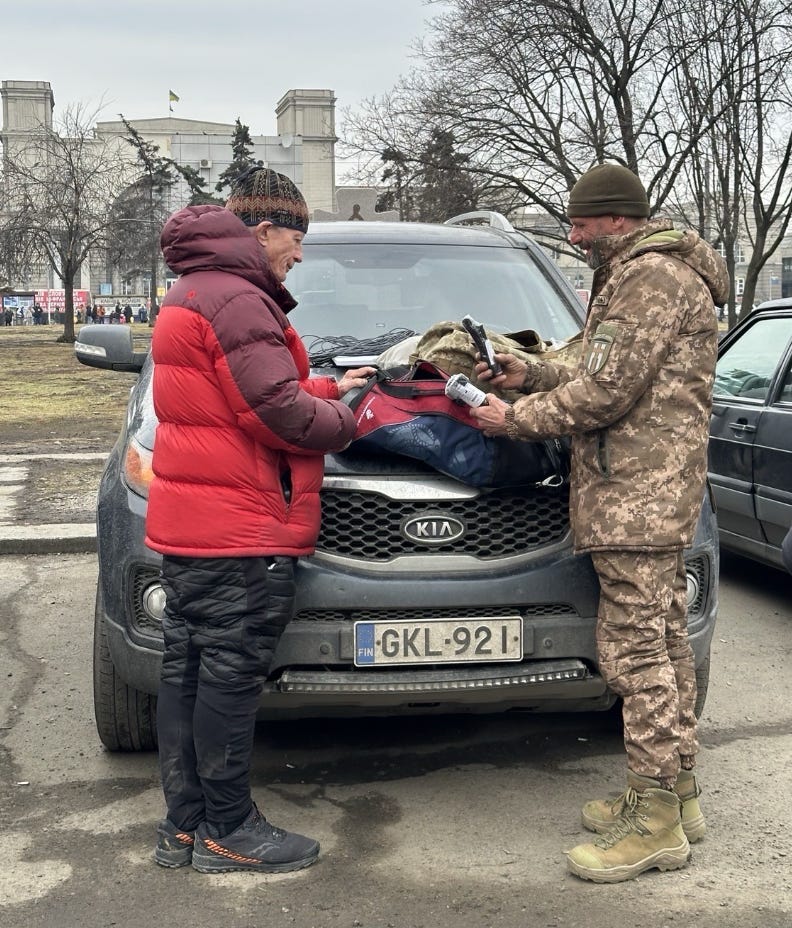
I asked Stuart about the mood there. Here is what he said:
“And, you know, I would say, to the degree you can generalize about it, I would say Ukrainians are tired, but who wouldn’t be? They were entering the fifth year of the war. I think they feel that they’re winning — which is, Ukraine is winning. And, just the tragedy here is that the United States, which, as we’ve seen in the past few days, has such immense, military might, is not doing more to help defeat a genocidal dictator trying to take over the country of the largest land mass in Europe.”
We cover a lot of ground in our discussion, including how Zelenskyy has used the Iranian-Russian Shahed drone attacks on the Gulf Arab states to gain important legitimacy among Putin’s OPEC partners in the region, something that must be making both Trump and Putin a bit crazy.
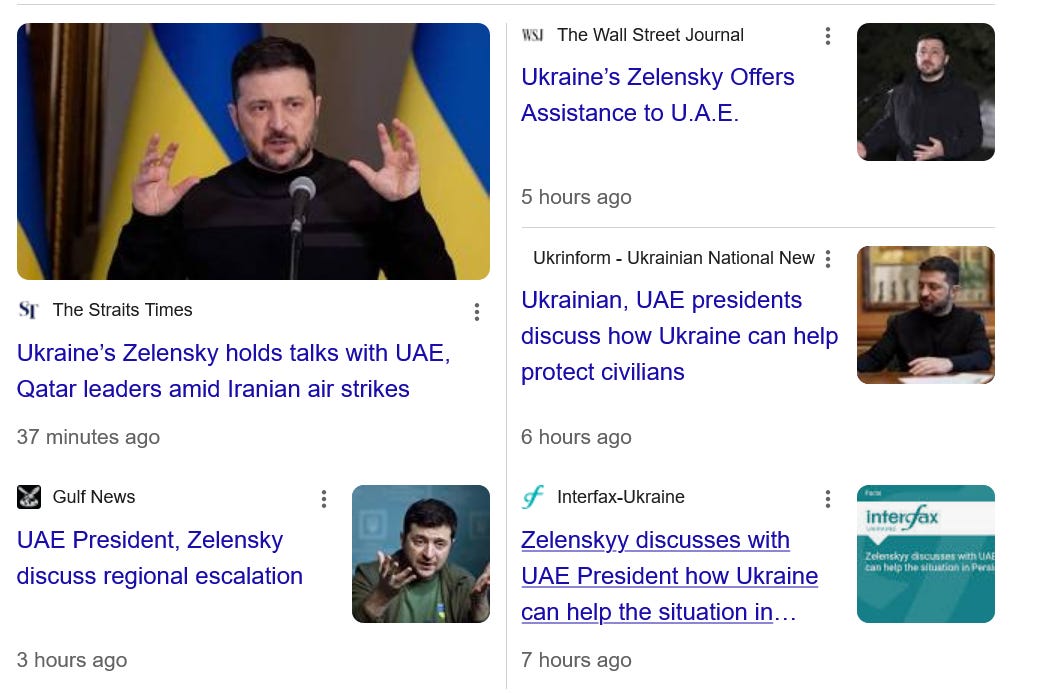
As we discuss it is my hope that pro-democracy forces use Trump’s illegal, vainglorious New Gulf War to launch a new campaign to revive American support for Ukraine in a war of far greater geopolitical importance to us. Putin has seen three of his most important global allies - Assad, Maduro, Khamenei - fall in the last 16 months and Ukraine has not just held their ground but made advances of late - despite America ceasing all our aid. Our leaders should be fighting not just to end the this New Gulf War, but also to redirect those resources to help Zelenskyy and our European allies in their just and vital campaign to end Putin’s genocidal aggression.
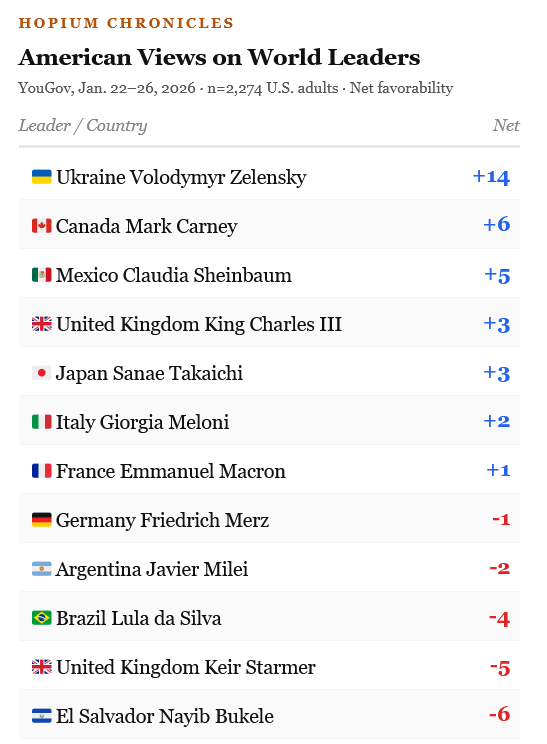
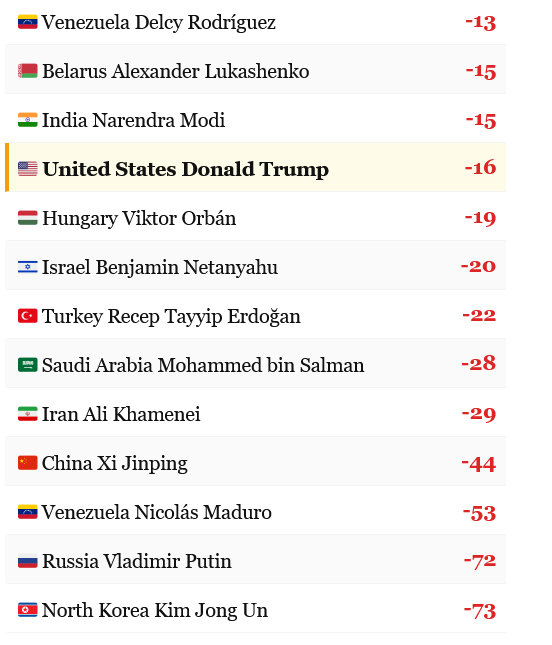
Finally, here’s that recent poll data we discuss showing Zelenskyy to be far more popular in America than Trump and Putin.
Enjoy this compelling discussion with Stuart Stevens, one of the great ones, and keep working hard all. It’s a consequential time and I am grateful every day to be in this community with all of you - Simon
Related Hopium Material
Trump foreign policy discussions Rep. Adam Smith (new), historian Phillips O’Brien, Senator Chris Coons, and Senator Jeanne Shaheen
Transcript - Simon Rosenberg and Stuart Stevens (3/3/2026)
Simon Rosenberg:
Welcome everybody. We've got a special Hopium Chronicles today. Joining me from Ukraine, Stuart Stevens from Lincoln Square. Stuart, welcome. Thanks for joining us today from such a far away place. Listen, you know, there is a lot going on in the world. You're in the middle of it all. Tell us about your trip, what you're doing there. What are you learning? What are you hearing from your trip?
Stuart Stevens:
Yeah, so this is actually the second trip I've made. I made one in October with an organization that does a bunch of different things. It's a joint Finnish and American aid organization. And one of their primary tasks is they acquire vehicles all sorts, ambulances, pickup trucks, SUVs, some regular cars, and fill them full of humanitarian aid. We drove down from Helsinki last week, which is a long drive, by the way. I was in an SUV that wouldn't go over a hundred kilometers an hour. But, you know, filled with a lot of electronic gear, stuff to help with Starlink, warm clothes and a lot of medical supplies. So we drove to Kyiv and we've been distributing the supplies and turning over the vehicles to brigade commanders. We did in Kyiv and then yesterday drove down to Dnipro, and handed it to a brigade commander who then would take it to the front lines, which from Dnipro's not that far.
You know, Kyiv is fascinating. People say, what's Kyiv like? And I go, it's like Paris. It's like Prague. I mean, this is not Stalingrad… I'm writing a piece for Lincoln Square called Hot Yoga from Kyiv because, you know, I did a hot yoga and a spin class today. This is a big European city, which I think is part of the sort of difficulties here because there is the largest land war since World War II right here. You know, we tend to think, at least I do before I came to Ukraine, that it must somehow be entirely removed from any experience we've had as Westerners when in fact if you were in New York City, or Indianapolis or Boston, and the second largest army in the world has decided they wanted to murder you and your family. That's what it would be like… you would try to keep as much [of your day-to-day life] the same as you can and I think that there's a lot reminiscent to me of London and the Blitz where people just carry on.
I'll give you a perfect example. It's kind of silly, but I thought it was telling. The other morning I found this spin class which is in a studio that looks like it's in Santa Monica. And it's a nine o'clock start and I was fussing around with my bike and then a voice came over the, you know, internal intercom, Ukrainian. Since it's Ukraine and I don't speak Ukrainian, I had no idea what he was saying. And then I realized that everything had gone totally silent and everyone was standing very solemnly by their bikes. And then I realized, like, what an idiot I am. At nine o'clock every morning in Kyiv, seven days a week, the entire country stops for a moment of silence for those who have fallen. And this happened. And then, you know, everybody got on their bike and we had a spin class. And that sort of is the balance, I think, of what it's like.
The power has been out a lot since I've been in Kyiv, you know, because the Russians have successfully been hitting this infrastructure. But Saturday night, the streets were full of people. It was dark, but there are generators. And, you know, I would say, to the degree you can generalize about it, I would say Ukrainians are tired, but who wouldn't be? They were entering the fifth year of the war. I think they feel that they're winning — which is, Ukraine is winning. And, just the tragedy here is that the United States, which, as we've seen in the past few days, has such immense, military might, is not doing more to help defeat a genocidal dictator trying to take over the country of the largest land mass in Europe.
Simon Rosenberg:
Yeah, I think the story, you know, that living a normal life, getting on and going out and partying and having dinner out with friends is a form of defiance, right? It's incredibly important that we all in our own way, back in our pro-democracy movement here, talk often about the need to not let them get you down that you've got to continue living a life and finding joy. [It’s] essential for perseverance but also as a way of defying, you know, their goal of terrorism, right, the terroristic goal, the authoritarian goal is to oppress and keep you down. And continuing on every day is a powerful form of defiance against what they're trying, so it is great to hear. Congratulations on finding hot yoga…
Stuart Stevens:
And sort of in this hot yoga class in the middle of it the power went out. So the room was completely dark… I'm not sure anybody even noticed…
This is a very resilient country, a country with tremendous human resources. And this group that I'm working with, one of the things they do is support a company that has begun since the invasion that is inventing a new kind of drone, land based drones. We deliver some vehicles to their factory, which is on the outskirts of Kyiv. And it's extraordinary. It's full of these kids and engineers. Some of them look like gamers. Some of them look like MIT nerds in these warehouses. And they're inventing and manufacturing these land based drones which will go up to a hundred kilometers now. And one of the big problems now, you know, 80% of all casualties in this war are by drones now. So you step outside when you're within, you know, ten, twenty kilometers of the front lines, you have these fiber optic control drones that will hunt you. So there's a huge problem as soon as you're in a bunker and you need to evacuate a casualty or something. As soon as you step outside, there's a drone there that's watching you. And you have ambulances. This group I'm working with has delivered a lot of ambulances that have gotten attacked. So these land based drones will go in and evacuate casualties and take in supplies. They look kind of like pickup truck chassis with big tires.
And I mean, it's incredible. War is being reinvented here. And the irony of this is when this war is over, Ukrainians have won, it's the United States that's going to need Ukraine. There was an exercise a month or so ago, I was reading reports of, where one drone unit here, twenty guys and females, because there's a lot of women out there on the front lines in Ukraine, did an exercise with NATO bases. And basically in two hours were able to prove that they could destroy any NATO base. And there's twenty of them. Just to show how unprepared NATO is for the war, and we've seen this now, you know, in the Gulf War, where you have a drone that flies in to a terminal, and it's a drone attacking a U.S. embassy. That's the future of war, and Ukraine is really on the cutting edge of it.
Simon Rosenberg:
Well, it is amazing. I mean, look, we were discussing before we came on air here today that, you know, Trump, and I've been writing in my commentary, and I had Congressman Smith on last night, that it's becoming increasingly clear that Trump either was unaware of what was going to happen once the war began, or had dismissed briefings that were preparing him. But in my own view, I'm coming to believe that there was a collective decision to disregard what was the likely scenario. Right, in all scenario planning, the military is very good at this. The idea that Iran could strike back and hit, you know, soft targets throughout the region, given how close Iran is, right, to the Gulf Arab States. This was always… and particularly since Iran had been saying they were going to do this, by the way… we were completely unprepared for this. I mean, you know, we now have hundreds of thousands of Americans throughout the region that are being told they need to leave, but the airports are closed. The English, the British government is evacuating people. Our government is not evacuating anybody. But this issue of drones is in some ways becoming this fascinating thing, because for Zelensky and the Ukrainians, they've seen Assad fall in 2024, you know, the most important Middle Eastern ally of Putin. We saw Maduro go – another critical ally of Putin's in Venezuela. And now we've seen the Iranian regime decapitated.
And so Russia is, all of a sudden, its tentacles around the world have been cut off. It's humiliating for Putin. He hasn't defended any of his allies. And now Zelensky is in open conversations with the Gulf Arab states, these oil partners of OPEC partners of Putin's, to come in and defend them against these Russian-Iranian drones. And this creates an unbelievably fascinating dynamic. First of all, it's creating enormous legitimacy for Zelensky in a region that had always been sort of loosely aligned with Russia because of OPEC, even with Iran there. And Zelensky is now having a moment, right, where these countries…..the United States didn't work with their Gulf friends and Trump's business partners to prepare them for what's happening, and Zelensky today did a call with the UAE, the leaders of UAE, to talk about potentially coming and helping them defend against these Russian-Iranian drones. And so all of a sudden here's Ukraine, right, starting to take a position, you know, take a role in this international conflict.
Stuart Stevens:
Yeah, look, the Russian army is the largest terrorist organization in the world. Russia is a terrorist state. If I ran the world, I would not recognize Russian passports in the same way we don't recognize passports from ISIS. It is a terrorist organization that calls itself a state. And their war is a terror war, and they attack civilians deliberately. They target them. They hunt them. They have no regard for any of the established norms that have tried to keep war less horrible. And if you look, they haven't had a lot of success in Ukraine, but if you look at the places that they have taken in Ukraine, it's just horrible. They turn into a slave state with rape and torture, child trafficking. And this is what happened in Ukraine. So Ukraine has been at the forefront of fighting this.
And nothing escalates innovation as much as desperation. Ukrainians are at the forefront of this. I was talking to this woman who helps run this drone company. And she had gone to this little high school in Idaho as an exchange student. And she was talking… we just had the fourth anniversary of the invasion, about how she woke up that morning, [and] how like a lot of people, she just found it so incredible to believe that they were having a dinner the night before for a colleague at a sushi restaurant, and that they were gonna wake up and be at war. And she lived in an apartment building on the outskirts of Kyiv on a hill. And so she woke up at four o'clock and so, and looked down from her window and there was an attack helicopter below her window, a Ukrainian one attacking a Russian helicopter. And it was like, how did this world change like this? And, you know, she was involved in a lot of NGOs. Now she runs this drone factory. And, you know, she was just saying that the people that she went to high school with at this small, high school, conservative area, that [she] just can't believe that they just wouldn't want to do everything they could to support Ukraine. I mean, we're fighting Russians, we're fighting this terrorist state and you know I think the good news is despite everything that Trump has done to try to recast… and JD Vance, you know, the despicable spectacle of JD Vance attacking Zelensky and the Oval Office… most Americans still are with Ukraine overwhelmingly.
Simon Rosenberg:
Well, and it's the data on this is kind of amazing, actually. I mean, Putin's approval rating in the US is like 4%. There was a recent poll done by Morning Consult of Americans and how they viewed foreign leaders. And the most popular leader in the world was Zelensky. You know, twenty points more popular than Trump, for example. And so I think that one of the things, Stuart, I talked to Adam Smith about yesterday, is now that we're having a big conversation about war and our place in the world, I think pro-democracy forces should be pushing our political leaders to pass that sanctions package that's in the Senate and the House on Russia. And to restart funding Ukraine. And let Trump veto Ukraine funding bills. And if we're going to be in this fight, let's be in this fight for real, and to fight the war that really matters, not the one that Trump decided over breakfast last Friday morning that he wanted to go do to change the subject from the terrible economy and Epstein and all the other reasons that he did this.
But I think that our national security people have been too willing to accept Trump's withdrawal from the war in Ukraine. And if he wants to go fight this war, then we should be fighting, in my view, let's have a debate about where our resources and our money and our troops and our blood and treasure lie. And I think this is a debate worth having, certainly.
Stuart Stevens:
Yeah, I mean, look, as far as changing the world, I think you make a case, and I think history will prove this. That two-week period after Russia invaded Kyiv was a hinge in history. And I've spent time here trying to go to every one of these key places in the Battle of Kyiv. And I mean, it's extraordinary how close the Russians came and how close that was. And if you hadn't had these National Guard, in essence, Ukrainians, which are advertising executives, teachers, plumbers, electricians, going out and fighting the best troops that Russia has, which is what they sent in first in these pitched battles, Russia would have seized Kyiv.
And the world would be a very different place now. For generations, it would have been affected. And that's the thing, that Pax Americana — which is the great wealth and benefit and decency that has come from the sacrifice of the greatest innovation — would be completely squandered if Russia won this war. And to get here, the fastest way is to drive through Poland. And you talk to the Poles. I mean, they know this man. They know that if Ukraine fell, they would be next on the dinner plate. You and I have grown up in a world where the idea that you would get in a car in Paris or London and drive to Warsaw seems perfectly normal. That wouldn't be the world in ten years. So, the United States' interest is so much greater here than in Iran.
Look, it's a whole different conversation. I think Khamenei is a monster. I'm glad to see that he's dead. But just this efficiency of protecting America, protecting our values, doing everything that we can to support Ukraine… it's just the fastest way to get there.
Simon Rosenberg:
Yeah, I think we've been given an opening to have a different debate than Trump and the Republicans want to have. And I think in this first year of Trump we've accepted too much. We haven't fought. There have been fronts that we should have been contesting more aggressively, you know, this is one of them. Even the way that Trump has been attacking Zelensky in the last 24 hours has just been unacceptable. And our leader should be saying so, and I think that this is going to give the Republican national security world kind of a thing to go do which then means that we're not, you know, supporting Europe and Ukraine. And I think that we can't allow that to happen.
This is going to be a fierce fight. And Adam and I talked about this not on camera yesterday, but in the warm up, about how we're in a very different place now than we were a week ago as a country. This war is already, as I called it today, a shambolic shit show. It's just clear that the collective enterprise was unprepared for what Iran has done, how long this really goes on, how high oil goes, how much damage is done to the American economy. Certainly, I think a couple of things I've taken away is that number one we've all been given this graphic reminder of why our founding fathers put the power to declare war in the Congress and not in the presidency. Because we have an unhinged, addled, unwell, corrupt man who, by the way, has gone to war in part in Iran at the behest of his largest investor in his family's business, the Saudis. And it has that, you know, good return for the Saudis to get the American military to come in on their behalf and take out their adversary.
Stuart Stevens:
You know, Trump is always talking about how Europeans aren’t doing enough. What about the Saudis? Like, I mean, we’re going to war for the Saudis? Really? I mean, you know, and Kuwait shooting down our planes?
Simon Rosenberg:
Yeah. I mean, Timothy Snyder had a great piece about this, about the rent to army, you know, how the Saudis have now, for giving Trump a couple billion bucks, they've been able to rent the American military out… and by the way, something that's going to cost us hundreds of billions of dollars, right, collectively. So anyway, I think that where we are here in the U.S. is that we've entered a different moment now. And Trump has, to me, made it very clear to us political people that he is going to do whatever it takes now. That he's operating outside of the law and constitution which we knew. But particularly launching this war, involving hundreds of millions of people without congressional even consultation let alone approval… that we have to anticipate he's now declared himself King, that he feels that he's not bound by law and constitution… he won't feel bound by law and convention here and how he conducts his effort to stay in power. And, you know, we're facing… Stuart, I've written [about this] and I'll send you some of the stuff I've written about how we need to start reimagining. You know, we have to be the equivalent of the drone makers now in Ukraine, in the US, to sort of reinvent our politics, to adapt to a different battlefield now, because Trump is not going to stay within the law and the Constitution in the way he attempts to maintain power, because he knows that if we win the House or the Senate or both, that he will be dragged in front of committees because he's been a lawless criminal.
And I think the other thing we have to get our heads around is there are going to be a lot of foreign governments who will be working with him to keep the Republicans in power because they want America weak. Or they want America executing their foreign policy for them, right? I mean, whatever their reasons are that different foreign governments will want to keep the Republicans in power, you know, this is a sign that Trump is willing to do whatever, right. I call it the we're now in the “whatever it takes” election for Trump. Whatever it takes to stay in power. This is something we who've been doing this a long time, you know, need to be putting our heads together about ways we can help the family ensure that we have the election we all want to have in 2026.
Stuart Stevens:
Yeah, you know, say what you will about Jeffrey Epstein. He's the most powerful dead man in the world. First he shut down Congress, and now he started a war. It's not bad for a dead guy, you know. [Simon laughs.] And I don't think there's any question we would not be at war now were it not for Trump trying to change the subject from the Epstein case. I mean, it's incredible.
I think, look, in the sort of big picture here, the degree to which this war is sort of like ICE in a way. You take a reasonable proposition. We need to have secure borders. We need to arrest criminals. And then you carry it to this extreme of a paramilitary force budget larger than Marines, a bunch of fat guys with guns chasing brown people around the country and shooting Americans. So then it turns against you. What was your strongest issue becomes a negative for you. And I think the same here. Americans, had a case been made… Trump gives the State of the Union, he spent a minute in that State of the Union talking about Ukraine, by the way, the largest land war in Europe since World War II… had he tried to make a case for removing Khamenei, I think American people would have gone along with it, but it's just so obvious, like you're saying, that they started this and they had no idea where it would go. And where it is today… I think it's going to be a lot of bad days ahead.
Simon Rosenberg:
Yeah. I mean, there's the military historian that I follow who's a subject matter expert on air power. And he said, there's never been a regime changed by air power ever in modern warfare. And that what ends up happening almost every time is that the aggressor doesn't get what they want out of the bombing. And, you know, this harkens back to Vietnam, right? And they have to escalate or they're going to be politically embarrassed. He said, inevitably, the sort of the likely scenario here is that America, you know, it's day four, we've already sent in more planes and more troops than ever… four days we've already escalated our involvement there… and that inevitably he's either going to have to cut and run and declare victory early, or we end up with ground troops and with occupation and another Gulf War — another forever war. And that there really isn't… as he said, in history, there's not really this in between place that Trump has settled on. And based on the fact that, you know, we're a month in, you've spent all this money, why aren't we seeing more results? Why are the Iranians still sending drones into hotels in the UAE, right? Why, Mr. President, haven't you done more? And so then what happens is he wants more. And yesterday, Hegseth did not rule out ground troops, and you know I've looked at polling on this, and ground troops… the polling to support ground troops is between nine and thirteen percent right now in the polls that have been done.
Stuart Stevens:
And that’s before anybody starts dying.
Simon Rosenberg:
Well yes, and I think what's going to be fascinating is going to be, are they going to even report deaths? Or are they going to suppress all that? And that's going to be a very interesting thing because there's already a report of six soldiers who were killed in a particular place. And those names have not shown up on the CENTCOM list yet. And this happened two days ago. So I have a feeling there's going to be tremendous pressure on them to keep the casualty number [low]…and you remember this from Vietnam, right, this was a major issue in Vietnam, the reporting of the casualties.
In my own view about this, every time Trump does one of these kinds of strongman plays, it's immediately rejected by the country. He pushes himself further and further away from the electorate, and he gets weaker. And then he has to do another spectacular because he's grown weaker and he needs to become strong and mighty again. And what Adam and I were talking about yesterday is that, you know, it's clear in the interviews the last few days that Trump said his success with Maduro was a major reason [for this], right, after Maduro, they tried to take Greenland. The Europeans repelled him and he backed down… he went from Greenland to this mobilization that happened and what we have to realize now is that this is like his thing now. The domestic stuff isn't going very well for him — the economy is not responding, it's going to get much worse by the way the ICE stuff has been wildly rejected, the lower courts are thwarting him every day. And he now has this unobstructed field where he can be mighty and powerful in his own mind. I'm not saying this is in reality where he can play, you know, this is like a battleship, right. You know, a form of battleship, he's got toys and they're really cool. And, you know, he's going to do these things.
I think he's so delusional. You know, he's in his final lap, right? Like whatever we want to call it… that he's so desperate for this affirmation that comes from killing people and blowing people up and decapitating foreign governments. If we take a step back, Stuart, he's the most dangerous man that perhaps has ever lived in all of human history at this point because his capacity to wreak havoc on the world is unlike any other leader that there's ever been. And I think he's a sadist. And he's starting to do things that are, you know, incredibly objectively dangerous for the world. And his own political party, your old party, is about to give him license to keep going, it looks like over the next few days. And so, you know, I think for the Democrats and the pro-democracy forces, this is a big moment for us. And we have to… the soft comfort that the election was going to be about affordability, which was always, I think, a fantasy given what Trump was doing to our democracy and to our liberties and our freedoms. We're entering a completely different political battlefield now in the US. And what I'm excited about is that we needed to have this big argument as a country, this big discussion about our democracy, our liberties and our freedoms, and whether we're really committed to it or whether or not we are comfortable with autocracy. We needed this debate and this fight and we're in it now. And we need to be aggressive and not, go back and pivot back to affordability, which has been this, in my view, a slightly cowardly way of approaching this election. And so in that sense, I think there's silver lining here politically for us. That we're having a big argument now that we needed to have and which Democrats, frankly, have been a little bit reluctant to dive into.
Stuart Stevens:
Yeah, you know, look, the history of these wars is your popularity is at the peak when it starts. And there's a rally around the flag. So where is that popularity now? I mean, you know, half of his base, this is everything that they thought they were voting against. And I saw something where 6% of Democrats support this. And independents – it’s going to be overwhelmingly negative. And again, this is when it's going well. And those days aren't going to continue. And it's just completely unprepared the country for it. To articulate a case of why we're in another Gulf War, which is what we are in. We're in a Gulf War.
It goes to the reality is there is no governing philosophy that exists in the Republican Party. So normally you could say, okay, is this consistent with our values? Is this something that we would do? You know, there are no principles. It's not conservative. I mean, on any front, you know, we nationalize intel. You know, ICE is every Alex Jones fantasy come to life, what the left was going to do. Black helicopters, literally, masked men barging in your homes without warrants, seizing your guns. If you have a gun, they're going to kill you. That's what ICE is doing. And I just think it all kind of stems from the complete collapse of the Republican Party. And it's catastrophic. I think it's naive to think that a democracy isn't going to have tremendous harm if one of the two major parties decides that it no longer believes in democracy.
Simon Rosenberg:
Let me go back to one thing you said earlier as the last question, Stuart. You said people believe Ukraine is winning there. Can you talk a little bit more about that?
Stuart Stevens:
You know, there's a lot of discussion about this because of the 4th anniversary of the war that just happened. You know, you have to get a map of Ukraine, largest landmass country in Europe, and see what success the Russians have had since they began. Well, it takes about, I don't know, two hours max you can drive through it in a huge, huge country. I mean, they have not done very well. They haven't taken all of the Donbas. I was in Dnipro yesterday, and they thought they were going to take Dnipro, which was a Soviet military base in the space age back in the day. So here in Kyiv, they took the worst of what the Russians had in a winter that was the coldest in like twenty years, where people were literally freezing in their homes and they still suffered through it and went on, adapted. And look, you know, thirty to fifty thousand Russians are dying every month.
50% percent of the Russian economy is the war economy now. That's just unsustainable. And I think the technological edge that Ukrainians have accelerates. I don't know. I mean, I would encourage everybody, come to Ukraine. Come to Kyiv. You know, this little group I'm working with has a somewhat humorous, but statistically accurate… that if you come to Kyiv, the most dangerous part of your journey will be driving to the airport in the United States… one of the guys who was coming was in an Uber going to Dulles, and his Uber was totaled. So it proved this to be true. He had to get on a plane to come to Kyiv to be safer. But don't hesitate, come. And, you know, everything that we can do just to not let Ukraine disappear from the discussion. Because this is the future of our Western democracy. If, you know, God forbid, Russia should win.
Simon Rosenberg:
Well, Stuart, let me let you get back to your incredibly important work, and thank you for checking in. You know, you've inspired me today. In our list, in our agenda, the Hopium agenda, you know, standing with Ukraine is our number one issue in our priorities. I still believe, you know, that it is something we have to kind of rediscover in the pro-democracy movement, and use this debate we're having about our foreign policy to reconnect with the Ukrainians and this important mission in Europe. And I think that I'll take you up on your offer.
I mean, my grandfather Louis Rosenberg came from a town in western Ukraine. He was Jewish, so he ran away, you know, during difficult times in the 1890s. But a town called Kamianets-Podilskyi in western Ukraine that was once part of Poland. And so many American Jews came from that part of the world. Right, you know, people don't know the term “beyond the pale” was a term… pale was a part of Poland and the Jews were sent to beyond the pale… this part that was kind of unoccupied and that's the term. So that area is sort of beyond the pale where my grandfather came from, and I've never been there, and I would love to go see where his family is from.
Stuart Stevens:
And now there’s a Jewish Head of State.
Simon Rosenberg:
I mean, the story of Zelensky is so remarkable in so many ways. And that you know, he, yeah, Zelensky is an extraordinary historic figure. I mean, for him to be the most popular foreign leader in America, by a substantial margin, by the way, in the polling, is a testament. I mean, look, I'm appreciating this conversation because I realized that Ukraine has not been on my mind much of late, and that I need to re-engage. And so thank you for that. That's a gift you've given our community today. Thank you for your bravery and courage. Thank you for just your continued incredibly important commentary and just helping lift us all up and remind us what the mission is and for all the success that Lincoln Square has had, which has been remarkable. And, you know, have a safe trip. Let us know. I'll let people know when you get back. Safe travels, my friend. Stay safe. And when you get back, we got a lot of work to do.
Stuart Stevens:
In a few days, I'm going to take a train back to Poland. And that train, which I've been on before, is nicer than any train in America. I was on a train from Dnipro yesterday and it was nicer than any train in America. It's amazing what the Ukrainians have done in war, the way they have continued to live their life and live at a high level. So, thank you, Simon. Thank you for everything you do.
Simon Rosenberg:
See you everybody. Thank you Stuart. Safe travels and thanks everyone. If you enjoyed this conversation please share it with others, hit like here so more people can see it, and also subscribe to Hopium and to Lincoln Square. I should have let Stuart sort of do the pitch for Lincoln Square, but Lincoln Square has become a really important part of our independent media environment in the last couple of years. They're doing remarkable work there every day. And if you want to continue to follow him, that's where you can find him over at Lincoln Square. Thanks, everybody. Keep fighting.


