The Importance Of Character And Virtue In The 2026 Elections
Trump has reminded the American people why it is so important to have leaders of virtue and character.......

This essay is an excerpt from my daily Hopium post from July 5, 2026…..
Today, I want to return to a related theme we’ve been exploring here of late - the emergence of virtue and character as a powerful Democratic counter to the GOP’s Olympian levels of corruption and betrayal this year.
In their recent series of battleground polls the New York Times probed these matters in depth. Here’s a summary of their two primary “character” questions. Look at the advantage Democrats have in an electorate that across these six states is currently voting 47% Dem and 47% GOP. It’s a bit stunning:
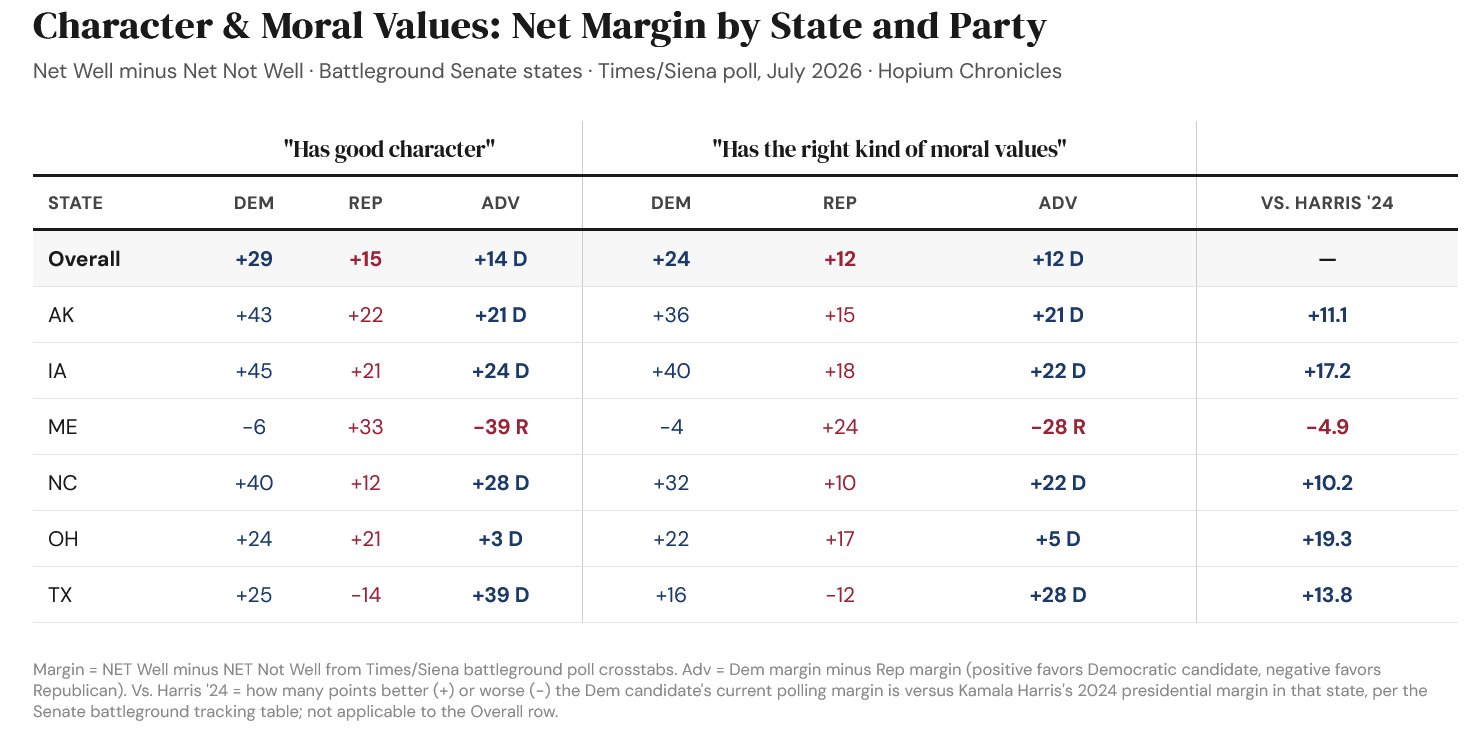
I should note that the last column on the right is how well the Dem candidate is performing against the Republican compared to Harris’ margin in 2024. We are witnessing dramatic overpeformances of our candidates throughout the 2026 battleground (yes Platner is as of today an outlier to this trend).
OK, Simon, we have strong advantages on character throughout most of the battleground. But how important is it to voters? Here is the average of the responses to a question about why people were voting for each Democratic candidate, open ended, meaning folks volunteered their answers and did not pick from a pre-written battery of options. This average is across all six battleground states:
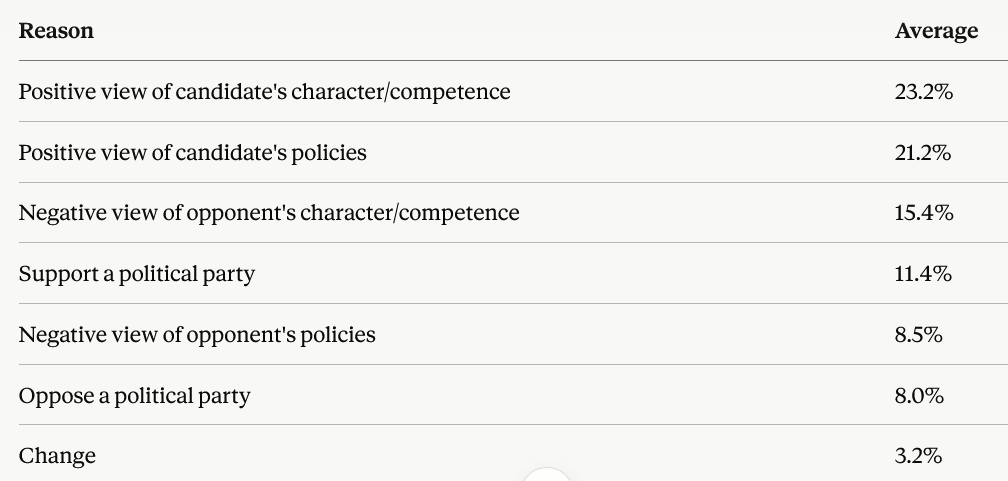
Summarizing the responses across the six states:
39% character/competence
30% policy/issues
70% something other than “issues”
So not only do we have important advantages on character, but character, in this age of GOP corruption and betrayal, has come to really matter to voters.
Now let’s compare these results from a poll CNN did earlier this year where they asked those who disapproved of Trump’s job performance why (61% disapprove, 39% approve). Here too they asked the question open-ended, not from a preset battery (and yes it is more than 100% for some people gave more than one answer). This 61% are the voters most available to us this year:
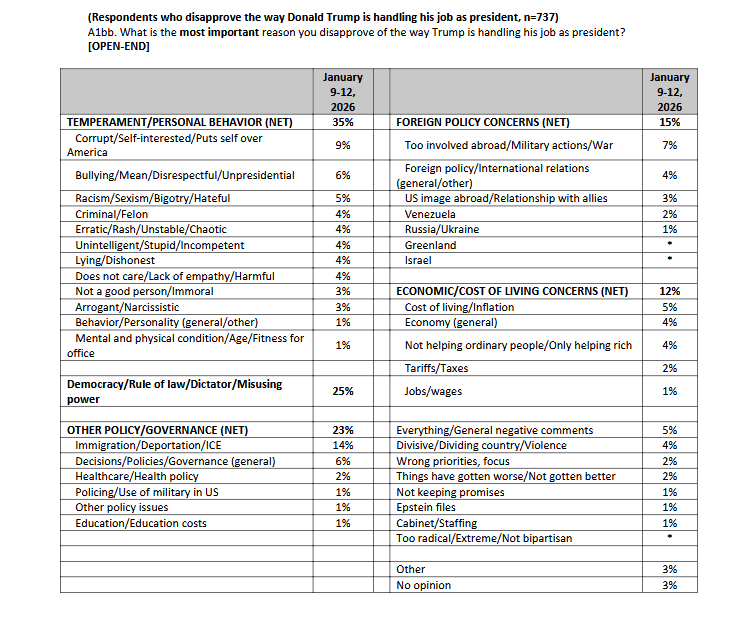
Let’s summarize the findings:
35% - Temperament/Personal Behavior
25% - Democracy/rule of law/dictator/misusing power
23% - Other policy, including immigration and health care
15% - Foreign policy
12% - Economy/Cost of Living
These findings, again open-ended, are similar to what we see above - character matters to voters in this election, and traditional “policy/issue” areas are perhaps not as central to how people form their opinions about politics as much of our polling and discourse suggests. This notion that our very heavy issue oriented polling/research may be preventing us from listening to the electorate properly is something I explored in depth with New Yorker writer Nathan Heller when he came to visit last year.
The questions in both the NYT and CNN polls ask a voter why they are supporting a candidate or why they disapprove of Trump. Here are the results of different question the NYT asked across the six battleground states, a traditional “most important issue” question, also opened ended. Note again the strong performance of things we don’t consider to be “issues,” and the once again the strong performance of “threats to democracy.”
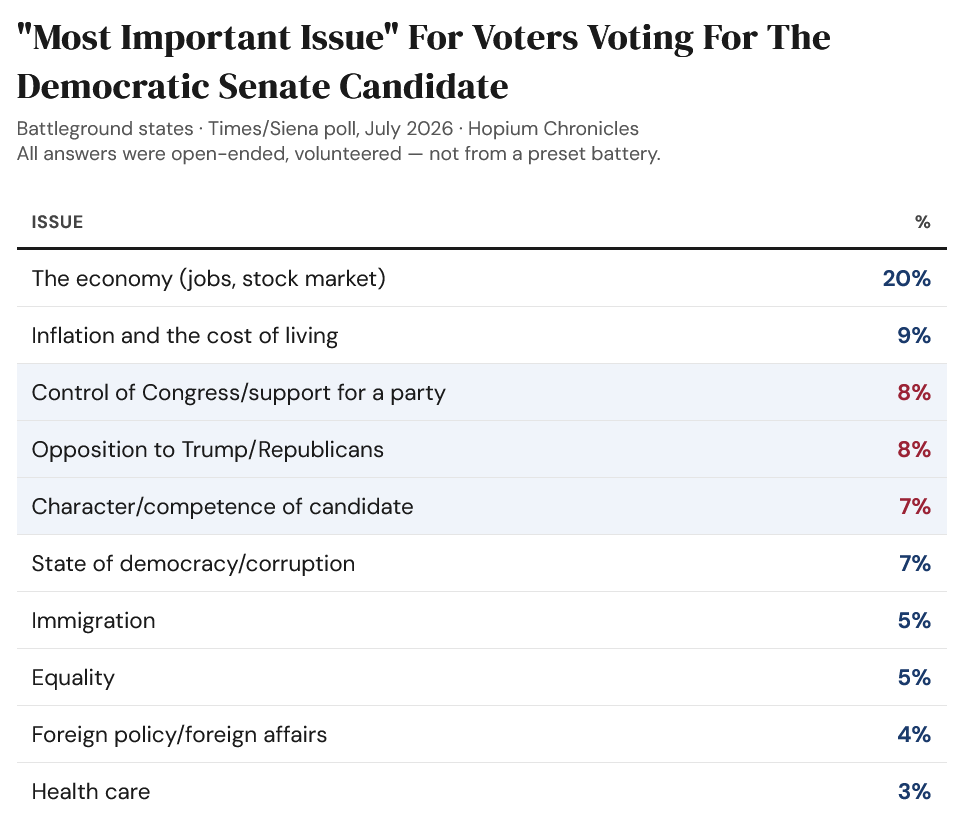
A few other takeaways from this data:
This data provides additional evidence that “threats to democracy” (No Kings) is far more important than our current convention wisdom inside the pro-democracy family. For more on this check out my conversation with Marc Elias from earlier this week.
Democrats need to come to understand why health care keeps performing so poorly in open ended, not pre-set battery polling. In the CNN poll health care came in at 2%. In NYT’s six battleground states it was just 3%.
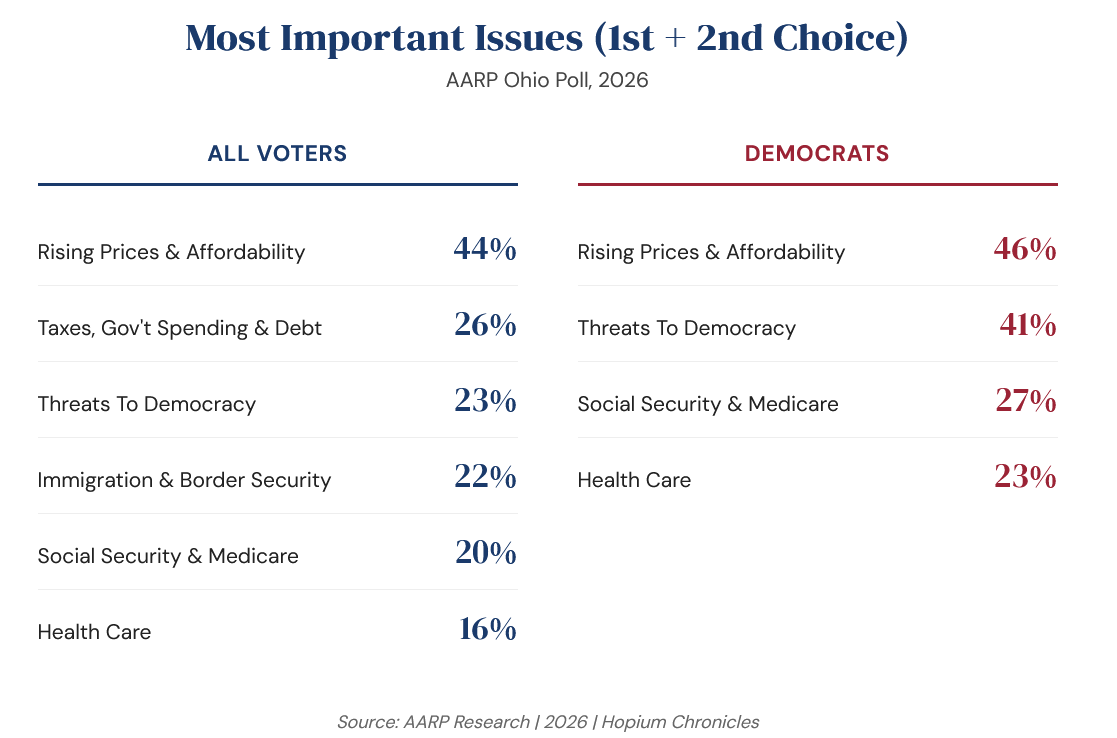
A final point. What all this data tells us is there is no single dominant issue in the election, and that we must speak broadly to a variety of concerns of voters - economy/prices, threats to democracy/corruption, character/virtue, and health care. G. Elliott Morris has been arguing that one of the reasons Democrats are performing so well right now across the country is that we are doing far better in speaking to people’s “most important issue,” whatever that issue may be. Which suggests, strongly, that we cannot pivot from perceived second tier issues but speak to them forcefully. In our retail communications it’s not an “or” or a “pivot” but an “and.” We must also be agile and savvy enough in parsing through this data to eliminate the views of the 35% of the country or so that are just not available to us. Their extreme, MAGA/Fox bubble views should not dictate our understanding of how we talk to the voters who are available to us. Look at the difference between all voters and Democrats in this recent AARP poll in Ohio we discussed the other day:
Keep working hard everyone. We have a country to save, and elections all across this great country to win, together! - Simon